Leadership Highlight
Leadership Highlight: Virginia State University’s Student Government President Marquis Mason


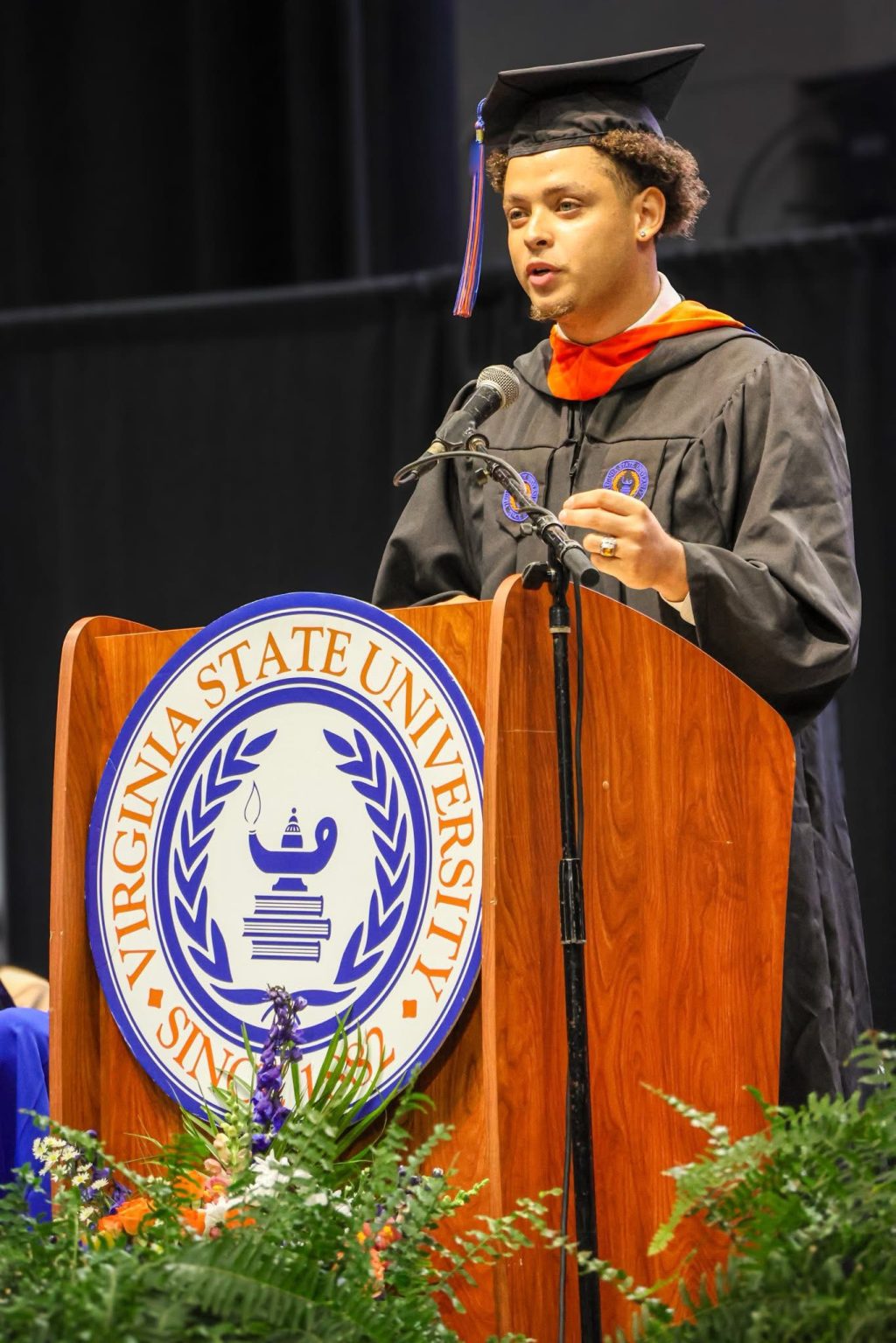
In an effort to highlight the people who are leading colleges and universities across the nation, we at Watch The Yard reached out to Virginia State University and did an interview with Marquis Mason, the 2025–2026 Student Government Association president.
The position of student government president is a highly respected role and there is a special pride that one takes in being elected by their peers to lead. Marquis Mason, who is majoring in Business Marketing, is from Petersburg, Virginia.
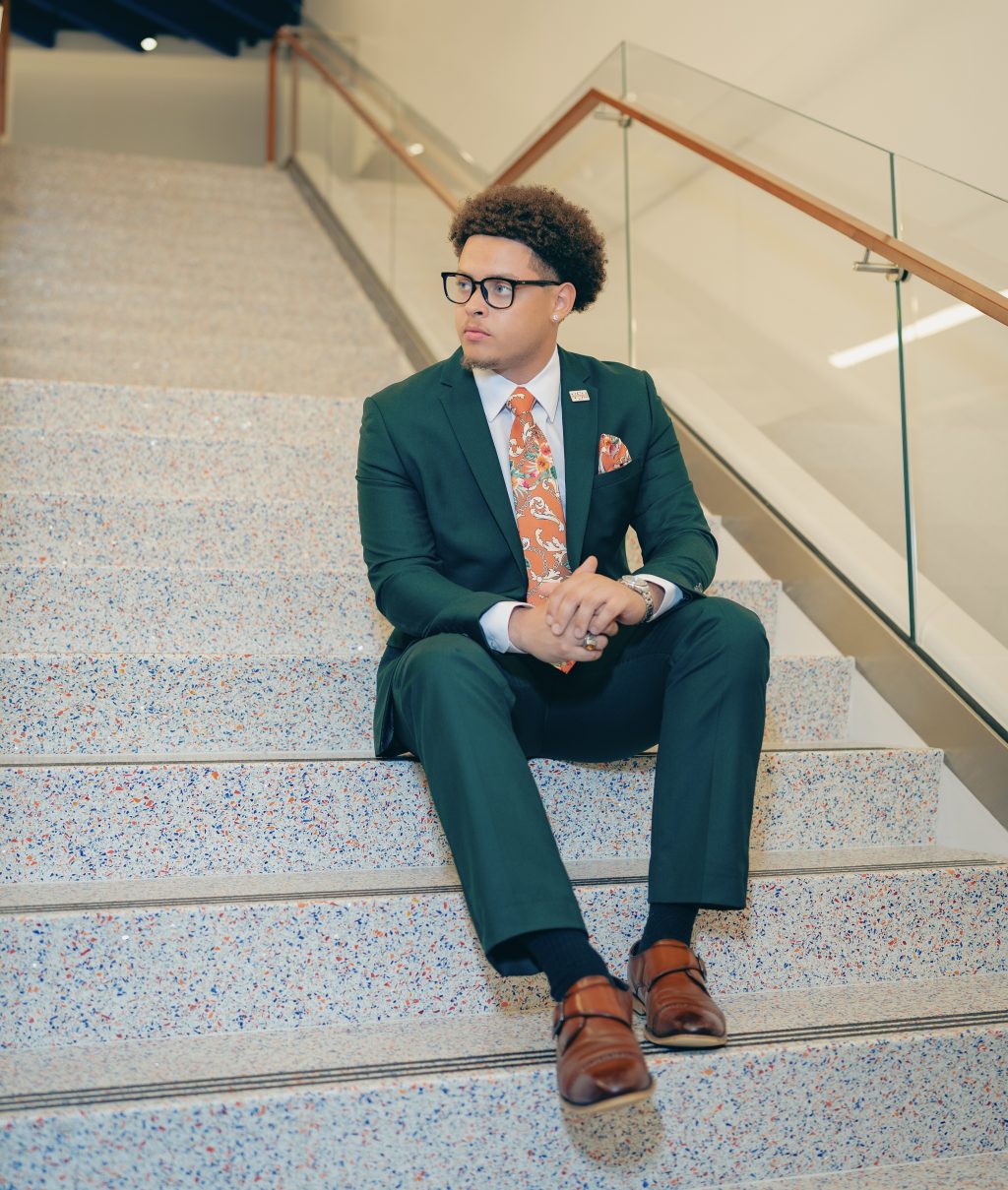
We interviewed Marquis Mason and talked to him about his position, goals, future and what it means to hold this type of leadership position in 2025–2026.
Read the full interview below.
What is the biggest thing you’ve learned as a student government president so far?
The biggest thing I’ve learned as SGA President is that leadership is not about one moment. However, it’s a responsibility you carry every day, even when nobody is clapping. It’s easy to look at leadership like it’s the microphone, the title, the visibility, the votes. But being President taught me that the real work happens when the room is quiet. When students are frustrated, when information is unclear, when you’re tired, when you’re misunderstood, and when you’re pushing for progress, but people only see the delay.
I’ve learned that trust is everything, and trust is fragile. One decision can build confidence in student leadership, yet one careless moment can break it. That forced me to lead with a higher level of discipline. Not just discipline to be right, but discipline to be honest. To communicate even when the update isn’t perfect. To stay present even when the situation is uncomfortable. To be accessible even when the workload is heavy, because students don’t need perfect leadership they need consistent leadership.
I’ve also learned that leadership will cost you something. It will cost you comfort, and sometimes it will cost you approval. You can’t lead a campus trying to be liked by everyone. People are going to disagree with you. People are going to question you. But if you’re rooted in purpose you don’t crumble under that pressure, you mature under it. And you learn to separate noise from need and that drives action.
Most importantly, I’ve learned that I can’t do this alone and that I’m not supposed to. This role taught me the power of building a real team and setting a real standard. Not just having positions on paper, but creating a culture where people show up, communicate, and execute. Because student government is about being effective. Students deserve leadership that follows through, and a campus deserves leadership that can be trusted even when things get hard.
What made you decide to attend Virginia State University for undergrad?
Honestly, Virginia State University almost wasn’t my story. Going into my senior year of high school, I hadn’t fully decided where I was going to college. I was exploring options, and I even took the ASVAB test and scored high enough to land a solid path in the Air Force. That was real for me, because my family situation was real too. My mother couldn’t just pay for college and even with me graduating strongly with all A’s, ranked number three in my class. A lot of schools still weren’t offering the kind of scholarship support that would make it realistic to choose differently.
Then I was introduced to two scholarships that changed everything for me. The Presidential and Vcan scholarships. VSU became possible for me on a unexpected full academic ride, and as a first-generation college student from Petersburg, Virginia, that wasn’t just a decision changer for me. It felt like God opening a door for me to walk a path I didn’t know could exist. Not just for me, but for my family, for what my name could mean, and for what my future could look like without debt hanging over it.
I didn’t choose Virginia State because it sounded good. I chose it because it represented opportunity without compromise. It meant I could build my future without burying my family. It meant I could pursue a business degree in a place that didn’t just talk about what success looks like. Yet created an environment where success could find me if I was willing to work, be visible, and be coachable.
When I got here, what I felt immediately was culture and community. VSU is the kind of place where you can come unsure and leave certain. Where you can come in as a kid with potential and be surrounded by people who push that potential into purpose. It became home fast because it was real and because it was natural.
And one thing I will always say is this: VSU gives chances. If you’re willing to put yourself out there, if you’re willing to say yes, if you’re willing to grow. This university will meet you halfway and then some and that’s what I saw early. That’s what I experienced up close and that’s why I chose to become a Trojan.
How has Virginia State University molded you into the person you are today?
VSU molded me by challenging me and nurturing me at the same time. When I arrived, I felt confident, but I was still young. I had just stepped into my abilities coming out of high school. I thought I knew how to perform and how to achieve but college has a way of teaching you that life is bigger than grades. VSU taught me how to become a man of purpose, not just a student with potential.
My first semester, I got involved early in the Reginald F. Lewis College of Business and Career Services at our student center Foster Hall. I learned quickly that visibility matters early for freshman, not for attention, but because when you place yourself in the right spaces, opportunities don’t always have to be chased; sometimes they find you. Being present, being prepared, and being willing opened doors for me that shaped my entire journey.
My first real leadership moment wasn’t what most people expect. I ran for Mr. Freshman for our Royal Court out of the blue. I wanted to challenge myself early. I learned dances, built relationships, and tried something completely new. I didn’t end up winning yet even though I fell short of the title, the loss taught me something I still live with. I didn’t need a title to serve, and I didn’t need a win to keep showing up. I could find success and be great in multiple ways here at VSU.
That same semester I took my first steps into entrepreneurship. I started GetRightSnaxx, my snack business, to give my dorm the needed access that the vending machines were not providing. It sounded like a wild idea to others at first, but it worked. It gave my peers something convenient, and it gave me exposure to the real market that exists at VSU: students come from all over with dreams, hunger, and a desire to build something bigger than where they started. We aren’t perfect, but we are different and we are greater in a way you can’t replicate, and entrepreneurship is one of the many areas we succeed in.
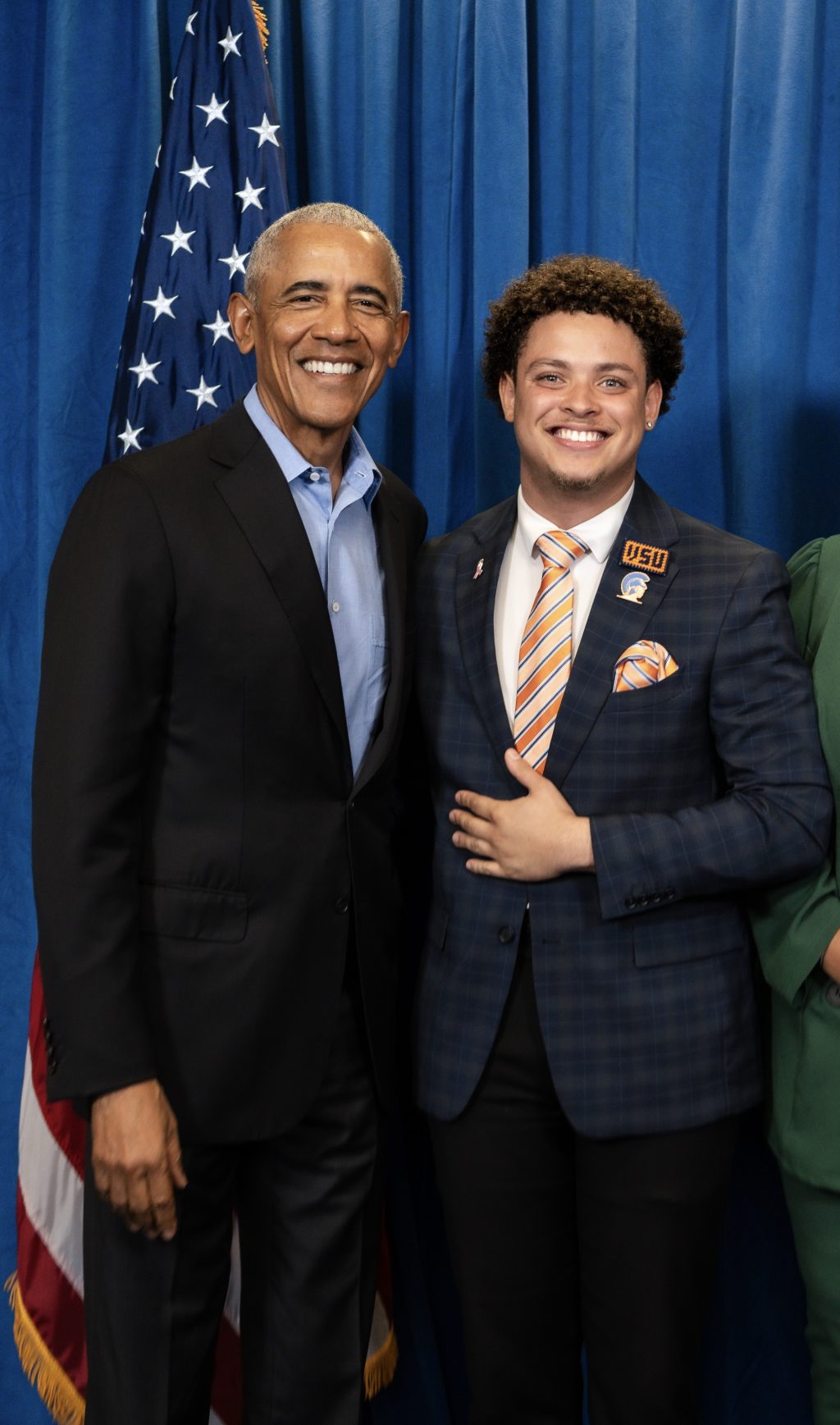
What specific initiatives have you headed up this year (or are planning) and how do you think they will improve the school and surrounding community?
When I came into this role, I noticed something that happens on many campuses: student government is doing work, but students don’t always feel it or see it. And once students feel disconnected from leadership, trust and engagement drop. People stop believing their voice matters and I was determined to change that by making SGA accessible and consistent, and by making our work something students could experience up close.
So, my first mission was simple: bring SGA to the students, not keep SGA behind closed doors. From April through the summer, I planned intentionally so we could hit the fall semester with structure, purpose, and a clear standard for how we serve.
Some of the initiatives and programs we led include SGA Week, a full week of student-centered programming created to increase transparency, accessibility, and involvement. We wanted students to experience SGA beyond meetings and titles, so we showed up in real time through presence, events, and direct interaction. Making leadership feel approachable and rebuilding trust through visibility. We also launched the Premier Newsletter to keep communication clear, consistent, and easy to access. Sharing campus announcements, resources, deadlines, reminders, and opportunities so students wouldn’t miss out simply because information wasn’t reaching them.
On the community side, I’m proud of our civic engagement. We held a voter registration push and successfully registered over 2,000 students in a matter of weeks. This is about helping others realize the power of HBCU campuses in local elections. When young people understand that their voice matters beyond campus and that leadership includes responsibility to the community that surrounds us. They begin to take the steps to be a part of the changes they want to see in their hometowns.
How is your student government administration/school currently working on attending to the mental health of students?
At VSU, I see students facing a real mix of academic pressure, personal stress, and emotional adjustment. Especially for students who come from fast-paced environments into something slower. That shift can feel isolating. You go from constant movement and noise to suddenly sitting with your thoughts more than you ever had to before, and not everyone is prepared for that.
As HBCU students, we also carry added weight. Many of us are first-generation. Many of us are balancing family expectations, finances, and the pressure to “make it” not just for ourselves, but for everybody watching. And mental health still isn’t something everyone grew up talking about openly, so a lot of students suffer quietly.
My approach has been intentional: meet students where they are and make support feel accessible. One example again is our First-Week SGA Help Desk, because mental health doesn’t only show up as counseling appointments. Sometimes it’s the anxiety of not knowing where to go, who to ask, or whether someone cares. Starting the year with visible, welcoming support mattered.
We’ve also supported mental health awareness efforts, wellness walks, and programming that encourages conversation and connection. To go along with the wellness days our institution has implemented throughout each semester. We use Premier Notes and the Premier Newsletter, to consistently push reminders and resources so students know help exist and they aren’t alone.
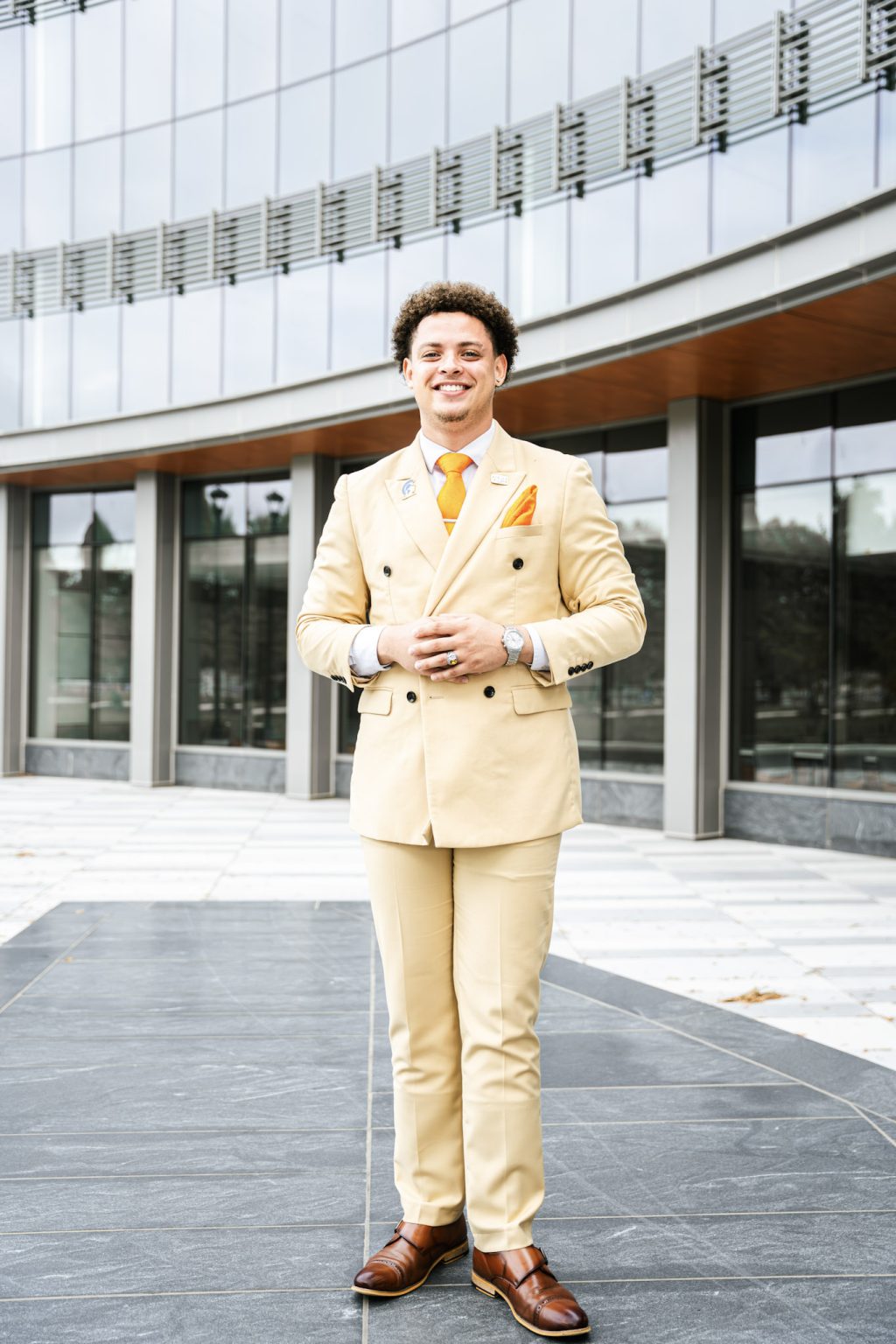
What does leadership mean to you?
Leadership to me is the discipline of putting people before ego, especially when no one is rewarding you for it. It’s the quiet commitment to carry responsibility long after the moment passes and long before the results are visible. Real leadership shows up when there are no cameras, no applause, and no guarantees. Only the responsibility to continue to do what’s right.
Leadership is also understanding that influence is fragile. One thoughtful decision can build trust, and one careless moment can undo it. That reality demands awareness of yourself, of others, and of the weight your words and actions carry. Leadership isn’t about being right all the time; it’s about being honest, consistent, and present, even when the pressure is high and the answers aren’t clear, yet they are still real.
At its core, leadership is service with consequences. Every decision impacts someone’s opportunity, someone’s confidence, and someone’s sense of belonging. Real leaders don’t run from that weight though; they accept it with humility and intention. Leadership isn’t a position you step into once; it’s a responsibility you recommit to every single day, through your actions, your integrity, and your willingness sacrifice.
We now live in a digital world, what do you think schools need to do to represent themselves online in 2025–2026?
In 2026, schools should represent themselves online the same way students experience them in real life; honest, human, and responsive. Students can tell when a page is just marketing. The era of overly polished posts that don’t match campus reality is over.
A school’s digital presence should feel like an open window, not a brochure. That means showing real students, real culture, and real moments. Not just the highlight reel, but the heart of the campus. It also means communicating in real time and responding when students ask questions or raise concerns. You can’t post and disappear anymore; engagement is two-way now.
For HBCUs especially, our online presence should balance legacy with relevance. We should honor tradition while still speaking the language of today’s students. If a student can scroll and genuinely say, “I see myself here,” then the school is doing it the right way.
Why do you think Watch The Yard is important to Black students and college culture?
Watch The Yard is important because it tells our stories with the depth they deserve. It understands that Black student leadership isn’t just a position it’s a movement that doesn’t have the luxury to ever rest. It captures the pride, the pressure, the culture, and the purpose behind what we do, and it amplifies it while maintaining its richness and beauty.
Too often Black excellence gets overlooked or oversimplified. Watch The Yard doesn’t do that. It shows the full picture for what it is. The work, the weight, and the people behind the title. It preserves moments that don’t always make it into official records and documents HBCU life in a way that becomes a living archive for all future generations.
For Black students, representation matters but accurate representation matters even more. Watch The Yard is one of the greatest amplifiers of Black college culture today because it makes our leadership visible, our wins undeniable, and our stories permanent. It reminds the world that what happens on the yard has national significance, and it reminds Black students everywhere that greatness lives right within them.
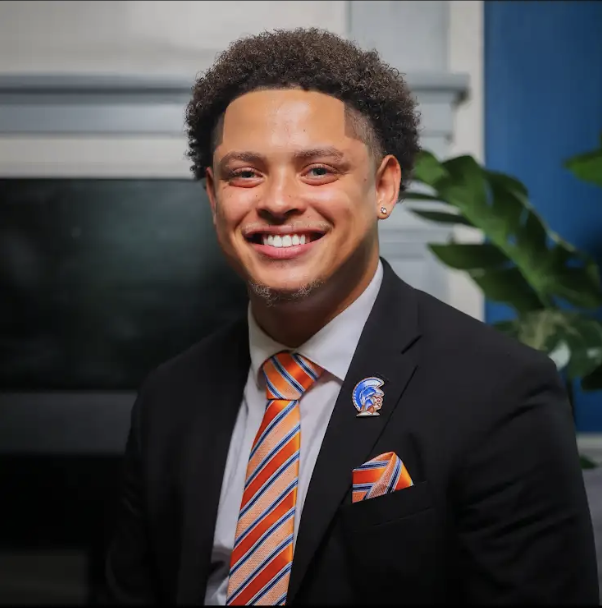
What do you plan on doing after graduation?
After graduation, I plan to move with intention and purpose. Everything I do next will be rooted in building access, ownership, and opportunity for people who don’t always get a fair starting point. I want my work to sit at the intersection of business, leadership, and community impact, because real change happens when strategy finds service.
As a Business Marketing major, I’ve learned how powerful messaging, branding, and storytelling can be when they’re used responsibly. Marketing is about shaping narratives, influencing behavior, and connecting people to opportunities. I want to work in spaces where marketing is used to elevate brands, organizations, and initiatives that actually serve communities, whether that’s through corporate roles, entrepreneurship, or public-facing campaigns.
At the same time, my experiences in student government have shown me how closely business, policy, and politics are connected. I’ve seen how decisions made in leadership spaces directly affect access, resources, and student outcomes. Moving forward, I’m interested in working alongside organizations, campaigns, or institutions where strategy, advocacy, and outreach come together.
Entrepreneurship will always be part of my path. Building GetRightSnaxx and NoFreeGame Apparel while being a full-time student taught me that business can be bigger than profit. It showed me how to identify gaps, respond to real needs, and execute under pressure. Those lessons prepared me not only to run businesses, but how to contribute meaningfully to professional marketing roles where creativity, discipline, and results matter.
We at Watch The Yard would like to commend Marquis Mason for his work as the student government president of Virginia State University.
Photo Credits:
@Sharingan.photography
@Azzyfilmss
@Deecapz_
@Tpcinema
@Officialvsutrojans