History
Where the Bridge First Formed: How Liberia Became the First Home of the Divine Nine in Africa

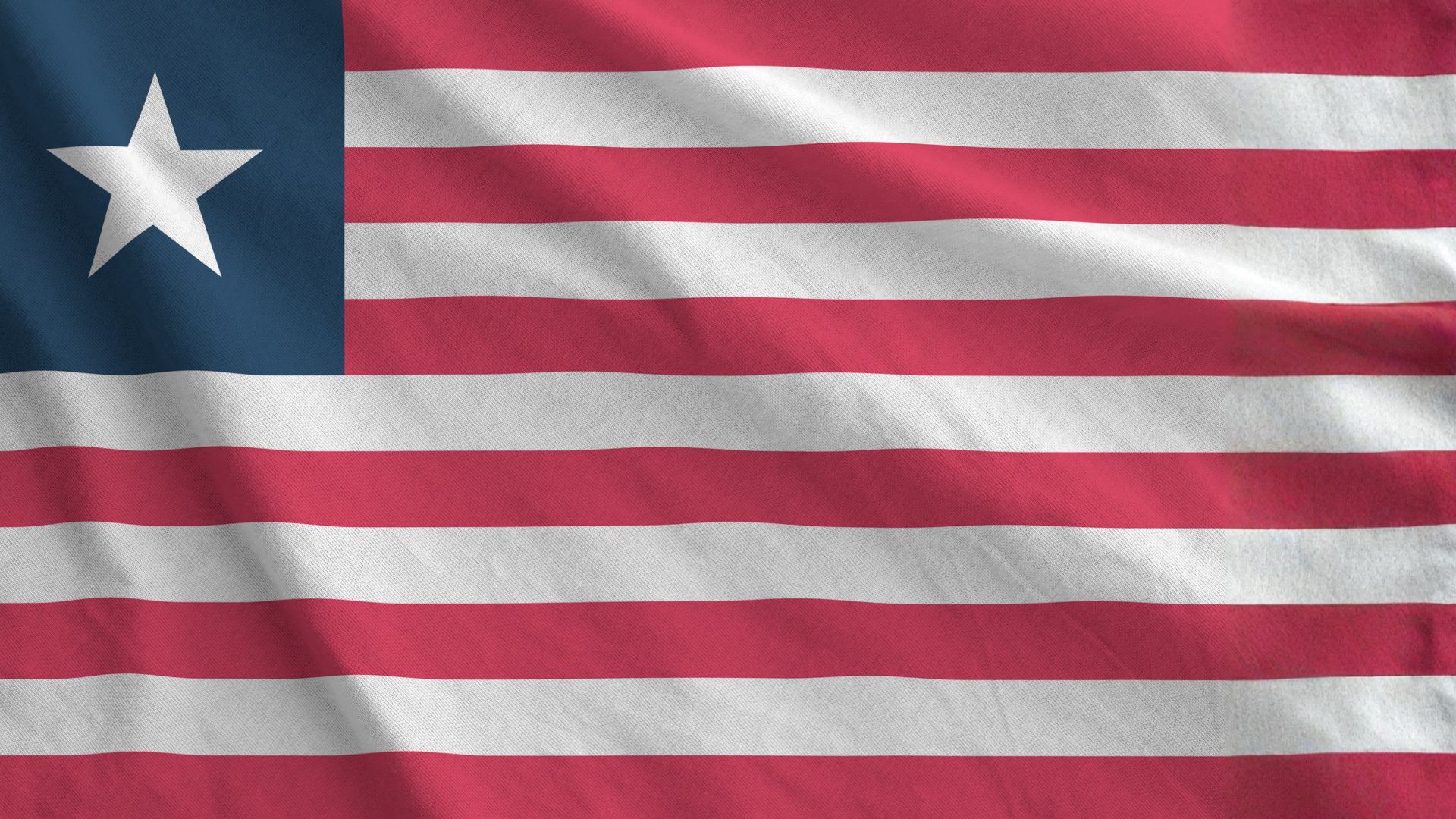
The following article is part of Bridges Built, a collaborative history project between Watch The Yard and NPHC West Africa documenting the history, presence, and impact of National Pan-Hellenic Council fraternities and sororities in West Africa. This series is being spearheaded by Freda Koomson, President of NPHC West Africa, a Liberian-Ghanaian-American and soror of Zeta Phi Beta Sorority, Inc., who spent months gathering archival materials, firsthand accounts, and community perspectives to ensure these histories are preserved and told with care.
Founded in the United States more than a century ago, NPHC fraternities and sororities have long served as pillars of leadership, scholarship, service, and community. As that legacy extended beyond U.S. borders, it did so through intentional relationships and sustained efforts rooted in shared values. Bridges Built centers those connections, documenting how Black Greek life grew in West Africa while honoring the people and pathways that made that growth possible.
On a humid December evening in 1948, a group of Liberian educators and civic women gathered in Monrovia to make history. They were scholars, leaders, and visionaries—women educated at Howard, Fisk, Wilberforce, and Lincoln universities who had returned home to build a nation still in its early years of independence.
They weren’t thinking about monumental firsts. But when they signed the charter for Zeta Phi Beta Sorority, Inc.’s Delta Iota Zeta Chapter, they unknowingly ignited a movement that would ripple across the entire African continent.
With that stroke of a pen, Liberia became the birthplace of the Divine Nine in Africa.
Over the next twelve years, Liberia would become home to the earliest African chapters of Phi Beta Sigma Fraternity, Inc., Omega Psi Phi Fraternity, Inc., Alpha Kappa Alpha Sorority, Inc., Alpha Phi Alpha Fraternity, Inc., Delta Sigma Theta Sorority, Inc., and Sigma Gamma Rho Sorority, Inc.—a historical sequence unmatched anywhere else on the continent.
Between 1948 and 1960, Liberia became the birthplace of the Black Greek Lettered Organizations in Africa. There, on the soil of Africa’s first Black republic, institutions built by African Americans intertwined with the aspirations of a young West African nation. The result was the earliest and most concentrated flowering of BGLO life on the continent—years before independence movements swept across Africa, and decades before “globalization” became a guiding word for these organizations.
This is the story of how it happened.
Liberia’s unique history, shaped by the arrival of formerly enslaved Africans and free people of African descent repatriated from the United States and many parts of the Caribbean, set the stage for the development of National Pan-Hellenic Council organizations in West Africa. The American Colonization Society established its first settlement in 1822, and Liberia later declared independence in 1847.
Many of these early settlers came to identify as Americo-Liberians—a sociopolitical class whose identity blended U.S. cultural norms, Protestant values, and an emphasis on Western-style formal education. Their children and later generations often pursued higher education at historically Black colleges and universities including Howard, Lincoln, Wilberforce, Tuskegee, Fisk, and Morgan; they attended predominantly white institutions like Harvard, UPENN, and others as well. Many returned to Liberia as members of the Divine Nine, bringing with them the rituals, civic mission, and fraternal culture—effectively bridging the Atlantic through shared identity, education, and institutional memory.
By the late 1940s, Liberia’s education system, civil service, and religious institutions were filled with U.S.-trained Liberian professionals. Among the most influential was A. Doris Banks Henries, a pioneering educator and cultural icon who would soon become central to the emergence of Zeta Phi Beta in West Africa. Meanwhile, the nation’s political environment under President William V. S. Tubman (who eventually became a member of Phi Beta Sigma) was uniquely stable and internationally oriented. Liberia’s open door to the world prioritized Black Americans—from missionaries to teachers to YMCA workers—this also set the stage for Black Greek life to flourish.
Zeta Phi Beta in Liberia: Trailblazing Sisterhood and Delta Iota Zeta
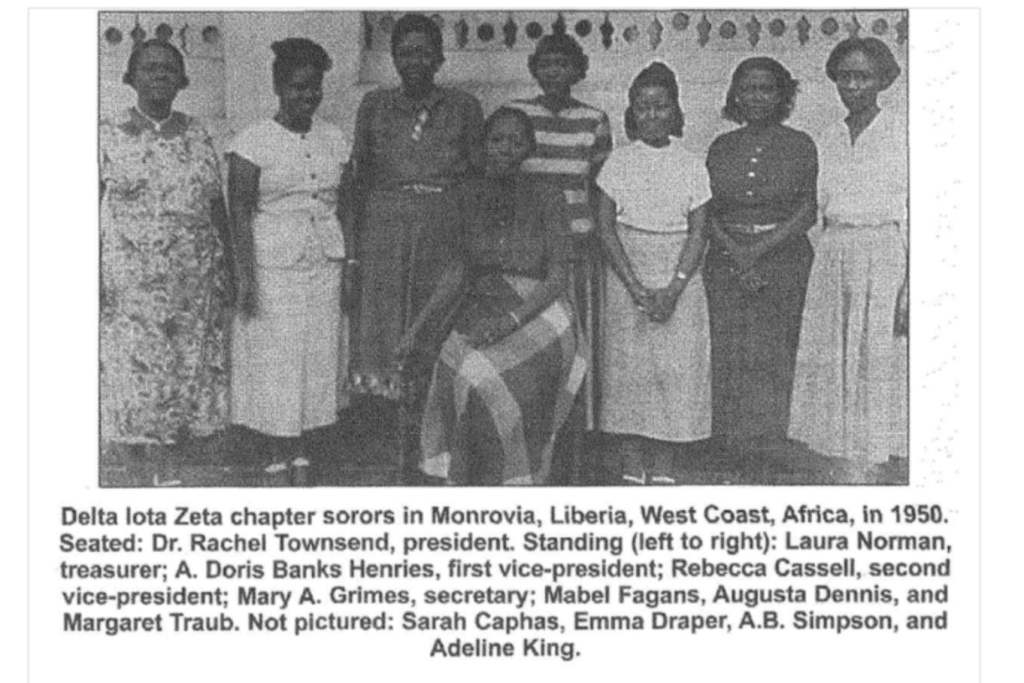
On December 19th 1948, history was made. Zeta Phi Beta Sorority, Inc. chartered the Delta Iota Zeta Chapter in Monrovia—the first international chapter in the sorority’s history and the first Black Greek–letter organization of any kind established on the African continent. Delta Iota Zeta was founded by Liberian women who had studied in the United States and returned dedicated to uplifting women and children. The original charter members of Delta Iota Zeta included: Dr. Rachel Townsend (president), Laura Norman (treasurer), A. Doris Banks Henries (first vice-president), Rebecca Cassell (second vice-president), Mary A. Grimes (secretary), Mabel Fagans (surviving charter member), Augusta Dennis, Margaret Traub, Sarah Caphas, Emma Draper, A.B. Simpson, and Adeline King.
The chapter’s early leadership included the aforementioned educator, A. Doris Banks Henries, later the sorority’s Regional Director for Africa. Born and educated in the United States, Henries spent most of her adult life in Liberia. Henries (1913-1981), an author, a historian, a biographer, an essayist, a poet, and a triumphant member of Zeta, pioneered the collecting of Liberian poetry and folklore. Her work emphasized the role of education in promoting African cultural identity for black people around the world. She produced 27+ books on Liberian education & Liberia including “Liberia, the West African Republic, Heroes & Heroines of Liberia” (1962).
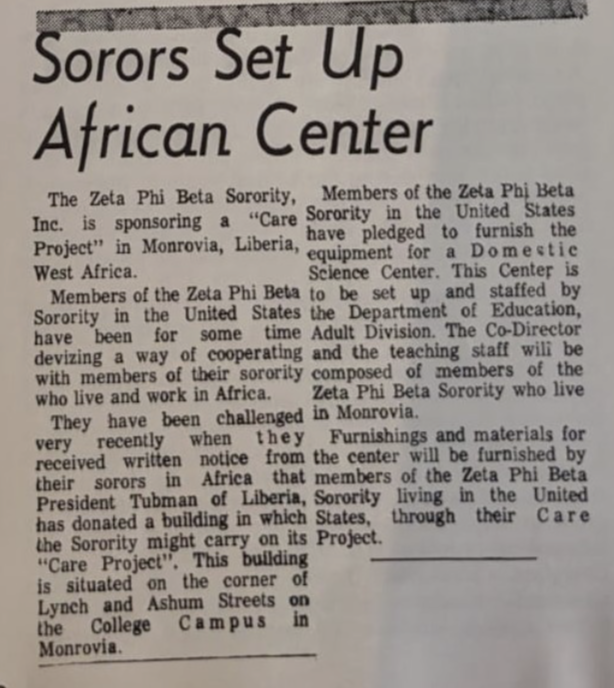
In 1949, Cecilia Adeline Cooper King was inducted as an Honorary Member of Zeta Phi Beta Sorority, Incorporated, aligning her lifelong dedication to education and civic duty with an organization whose principles mirrored her own. She was among the Americo-Liberian women whose lives embodied transatlantic currents of education, service, and leadership. She was —an educator, writer, and cultural figure whose intellectual labor helped define Liberia’s elite educational ethos in the early twentieth century. Born in Monrovia into a family deeply embedded in civic and educational life, Cooper King studied in the United States, attending Morgan State College and earning a B.A. from Howard University before returning home.
Her work as an educator emphasized moral instruction, social responsibility, and the cultivation of disciplined leadership—values drawn from U.S. classical education but adapted to Liberian realities. At a time when women’s professional roles were narrowly defined, she produced essays and educational writing that documented the social structures of Americo-Liberian society, offering one of the few female-authored perspectives on nation-building during the period. Cooper King also operated in the public and diplomatic sphere. She served as secretary to President Daniel E. Howard and married Charles D. B. King, later Liberia’s Secretary of State and four-term president. Her life bridged education, governance, and diplomacy—attending the Paris Peace Conference in 1919 and later accompanying her husband to the United States during his diplomatic service. Mrs. King died in 1950 at the Liberian Embassy in Washington, D.C., leaving a legacy that bridged education, diplomacy, and transatlantic sisterhood, underscoring the foundational role of Liberian women intellectuals in creating the conditions for Black Greek-letter life on the African continent.
First Lady Antoinette Padmore Tubman (Honorary Member), the dynamic wife of President William V. S. Tubman also became a powerful Zeta presence. Raised in Monrovia and Paris, she transformed national social services—founding the Antoinette Tubman Child Welfare Foundation, leading programs for disabled and orphaned children, pioneering mental health reform, and opening Liberia’s first major social welfare institutions. Her philanthropic leadership and deep investment in women and children embodied Zeta’s principles on an unprecedented national scale.
These pioneering Zetas, along with chapter members, began decades of service through literacy programs, health initiatives, and educational advancement efforts that touched every corner of Liberian society.
Phi Beta Sigma: Liberia’s First D9 Fraternal Foothold
Also in the late 1940s, Phi Beta Sigma Fraternity, Inc. was looking outward—beyond the U.S.—toward the Caribbean and Africa. That vision culminated in the establishment of its first African alumni chapter, Beta Upsilon Sigma, in Monrovia also on December 19, two years after the Zetas in 1950, making Liberia the fraternity’s earliest foothold on the continent.
Phi Beta Sigma’s footprint in Liberia is both formal and symbolic as the first NPHC fraternity to establish on the continent. This marked another important step in the Divine Nine’s rapid postwar expansion into Liberia and affirmed Monrovia’s status as a hub for both sororities and fraternities.
Sigma’s Liberian story runs much deeper than a chapter charter. It was etched into the very heart of Liberian political leadership—because President William Vacanarat Shadrach Tubman himself was a Phi Beta Sigma man.
William Tubman, often called “The Father of Modern Liberia,” built unprecedented political and cultural ties between Liberia and the African American community. In the late 1940s, during one of his visits to the United States, Tubman was inducted into Phi Beta Sigma Fraternity, Inc. as an honorary member—a symbolic recognition of his Pan-African statesmanship, pro-diaspora policies, and personal commitment to uplift through education and civic progress.
His induction was more than ceremonial. Tubman’s Sigma identity helped cement Liberia’s status as a natural landing board, for he believed that Black fraternal networks and HBCU-educated leadership were essential to nation-building. His administration actively welcomed African American educators, civic leaders, and fraternal organizations into Liberia—a policy environment that aligned perfectly with Sigma’s values of brotherhood, scholarship, and service.
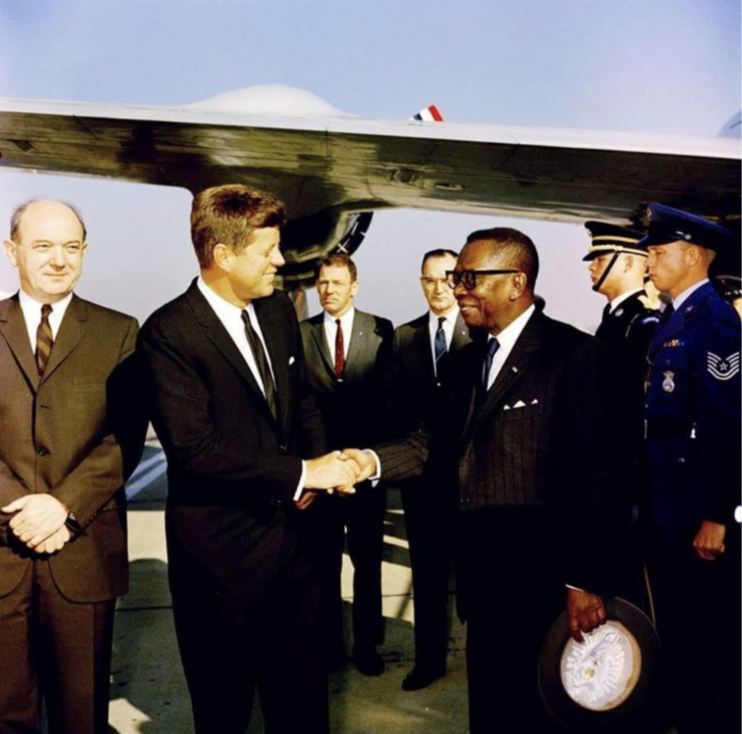
The political posturing of Phi Beta Sigma continued beyond President Tubman. William R. Tolbert Jr., who served as Liberia’s president from 1971 until the 1980 coup, was also a Sigma man—his membership linked the fraternity directly to the highest levels of Liberian government and symbolized how fraternal networks and national leadership interwove during Liberia’s mid-century modernization.
Long before Tolbert ascended to the executive mansion, he was initiated into Sigma in November 1950, while serving as a member of Liberia’s House of Representatives. Tolbert was the second initiate at the time, a pivotal moment that pushed membership to the threshold required to formally charter the new Beta Upsilon Sigma chapter—when combined with the brothers already on the ground. His involvement was active and verifiable: Tolbert’s own signature appears on the official charter application.
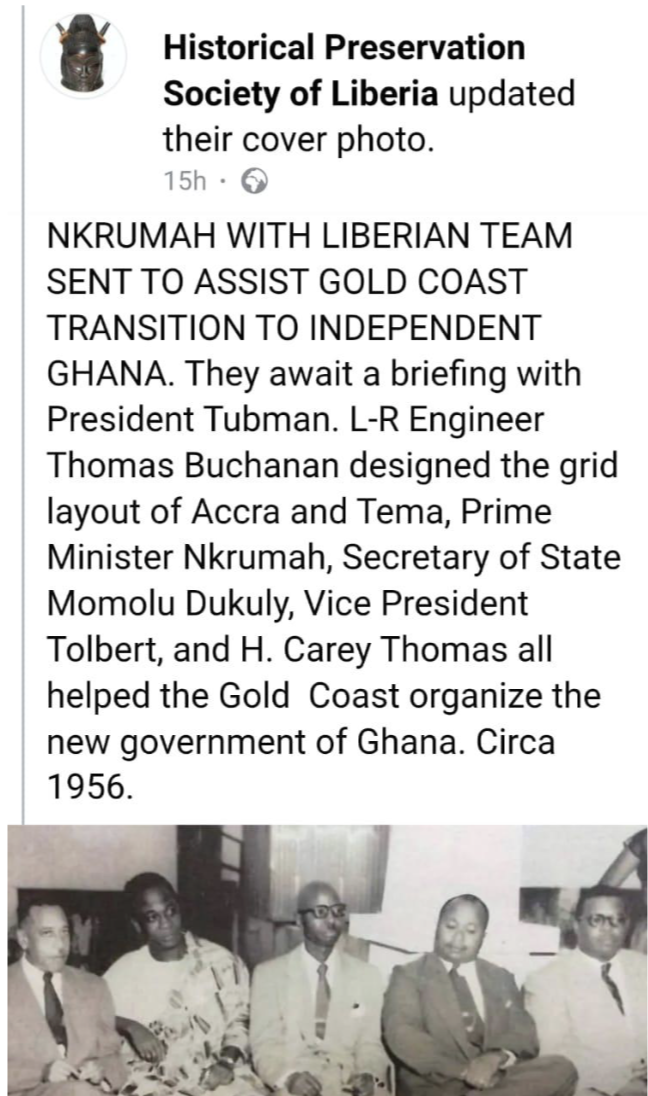
The timing was no coincidence. Just one week earlier, Richard Henries, also a sitting member of the Liberian House of Representatives, was initiated. Within a year, Henries would rise to become Speaker of the House in 1951, further cementing Sigma’s early entanglement with national leadership. Together, these initiations reveal a deeper truth often glossed over in historical accounts: Sigma’s engagement with Liberian politics was neither incidental nor retroactive. It was deliberate, strategic, and embedded at the legislative level—two decades before Tolbert ever assumed the presidency. In other words, by the time Sigma was credited with political influence in Liberia, the groundwork had already been signed, sealed, and sitting in Parliament.
Beyond formal chartering, Phi Beta Sigma’s international stature was amplified by Sigma brothers who were architects of African independence and Pan-African thought during this time period as well —most notably Kwame Nkrumah (Lincoln University’s Mu Chapter) and Nnamdi Azikiwe (Nigeria), whose Sigma membership helped shape the fraternity’s continental intellectual influence during the independence era. The presence of these giants—tied by fraternity to Liberia’s leaders—meant Sigma’s influence in West Africa was felt through ideas as much as through chapter roll calls. Phi Beta Sigma Fraternity Incorporated+1
Taken together, Beta Upsilon Sigma’s charter in Monrovia, Tubman & Tolbert’s Sigma identity, and the fraternity’s Pan-African intellectual ties add another rich strand to Liberia’s role as the Divine Nine’s first continental home—showing that the earliest BGLO presence in Africa was organizational, political, and cultural.
Just five years later, Liberia witnessed the chartering of the second NPHC fraternity on the continent. On December 1, 1955, Omega Psi Phi Fraternity, Inc. established the Tau Chi Chapter in Monrovia.
Omega Psi Phi: Early Expansion and Civic Leadership
The chartering occurred under the vision of Grand Basileus John F. Potts, who prioritized Omega’s international expansion. Sixteen distinguished Liberian leaders became the chapter’s founding brothers. The roster reads like a Who’s Who of mid-century Liberian excellence including such names as:
- Ernest J. Yancy – Diplomat; son of Vice President Yancy.
- Father Seth Edwards, Sr. – Episcopal priest and professor at Cuttington University.
- Lamar Forte – Agricultural educator.
- Dr. J. Romeo Gbleeh – Physician.
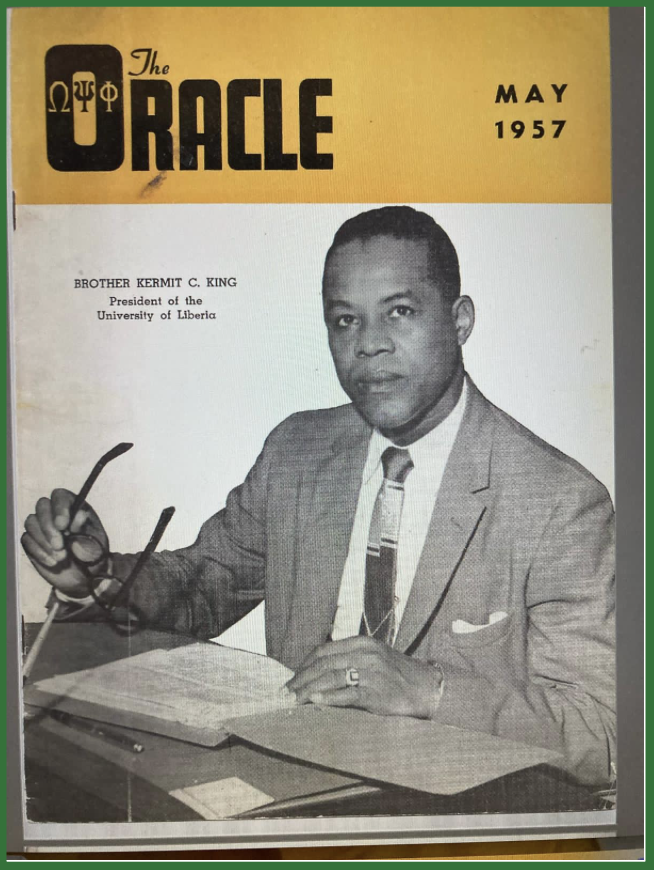
- Kermit C. King – President, University of Liberia
- Charles A. Dennis, Philip A. Cole, George M. Tappan, and others who shaped Liberia’s civic, religious, and educational leadership.
Beyond the formal chapter history, oral tradition speaks of earlier Omegas—Liberians who pledged in the U.S. in the 1940s and 1950s and returned home to practice the fraternity’s principles long before official documentation existed. Men like Rev. Edwin F. Morgan, Nathaniel McClain, and Thomas Wreh helped cultivate fraternal culture locally during Liberia’s pre-war golden era.
Even when political unrest later disrupted activity, Omega’s Liberian legacy endured through both formal membership and the memory of these early brotherhood circles.
Alpha Kappa Alpha: Scholarship, Service, and Eta Beta Omega
The emergence of Alpha Kappa Alpha Sorority, Incorporated in Liberia is rooted in the remarkable life of Anna E. Cooper, who was sent to the United States at just thirteen to pursue an education rarely accessible to African women at the time. After studying at Howard University—where she was initiated into the Alpha Chapter in 1917, likely in the presence of some of AKA’s founders—Cooper returned to Liberia armed with academic training, global exposure, and the sisterhood’s ethos of scholarship and service. Her leadership as the first dean of Liberia College and her unwavering commitment to nation-building quickly made her a central figure in Liberia’s emerging class of women academics and civic leaders.
Within the broader expanding landscape of development projects, diplomatic exchange, and educational modernization, Mrs. Cooper led a coalition of Liberia-based AKAs—including Beverlee Bruce, Elouise Duncan, Beryl James, Delores Mygil, and others—to formally petition their sisterhood to establish a Liberian chapter. Their petition was presented at the 1954 Boule in Nashville. Three years later, in 1957, their vision materialized when the sorority established Eta Beta Omega, its first international chapter—making AKA the 2nd Divine Nine women’s organization to plant an official presence on the African continent and the sisterhood’s 1st chapter outside of the United States.
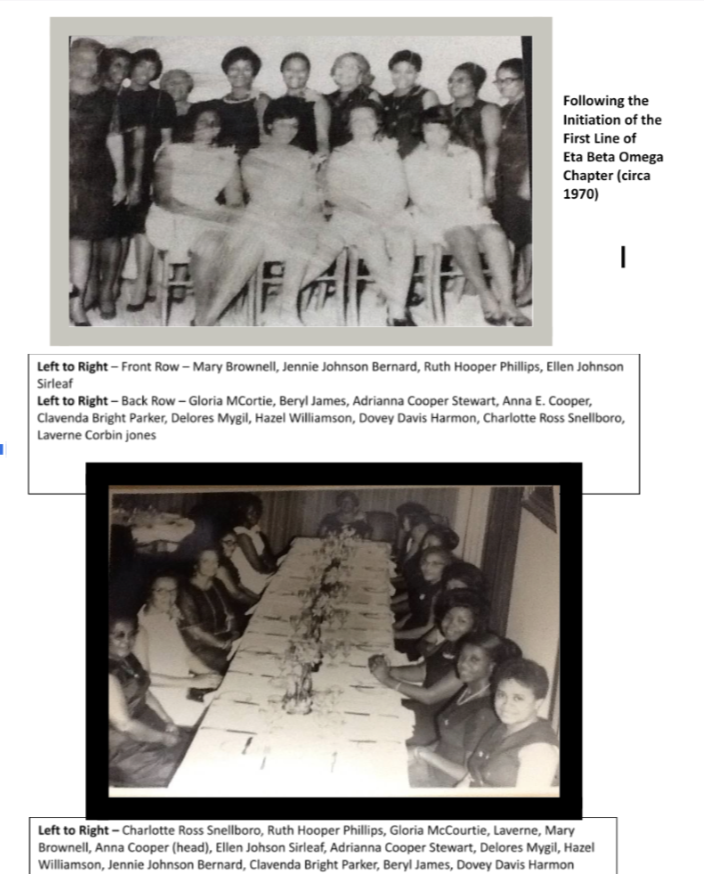
Early chapter members, many of whom worked in health, education, and public service, exemplified the transnational spirit of postwar Liberia and its collaboration with African American professionals. Within three years of chartering, the chapter hosted the sorority’s first international conference during the visit of Supreme Basileus Dr. Marjorie Holloman Parker in 1960, signaling the deepening ties between the sorority and Liberia’s national development agenda.
Throughout the 1960s and 1970s, Eta Beta Omega became widely known for its impactful service initiatives, aligned with Liberia’s urgent social needs. The chapter is especially remembered for establishing and renovating the Pediatric Unit of the John F. Kennedy Medical Center, and for its health education programs serving rural communities, including mobile clinics operated with medical and nursing students. Even challenges—such as limited communication with stateside leadership, the absence of a regional director, and logistical barriers—did not hinder the chapter’s creativity or commitment. Fundraisers were held like the celebrated Fanti Fantasy dances at the Ducor Hotel. When it opened in 1960, the Ducor Hotel was revolutionary because it was the first international-standard luxury hotel in Liberia—introduced during a period when most of West Africa lacked such infrastructure—signaling Liberia’s modernity, economic confidence, and its desire to position Monrovia as a diplomatic and global crossroads rather than a peripheral capital. Thus, the Fante Fantasy dances became a hallmark of Monrovian social life and helped sustain Eta Beta Omega’s service mission.
A year later in Monrovia, October 6, 1958, seventeen suited men stepped into a packed hall on Broad Street to sign a document that would alter the course of their fraternal history. When they rose from the table, Alpha Phi Alpha Fraternity, Inc. had officially chartered Eta Epsilon Lambda, its first chapter on African soil.
What looked like a single ceremonial moment was actually the culmination of a 22-year campaign that began with a missionary, was strengthened by a YMCA strategist, and ultimately fulfilled by a visionary general president who believed Liberia was their destiny. In 1936, when Alpha Phi Alpha gathered for its General Convention. Amid the usual debates about scholarships, community programs, and national strategy, the delegates took a vote that would ripple across continents. They empowered a little-known but deeply respected Alpha man, Rev. I. E. C. Steady, stationed in Liberia, with a rare authorization:
Explore the feasibility of establishing Alpha chapters in Africa.
No fanfare. No headlines. Just a mandate slipped into the record—an assignment that made steady the fraternity’s earliest ambassador to the African continent. For years, Rev. Steady quietly laid groundwork: conversations in clergy circles, dialogues with educators, relationships with government ministers and diaspora returnees. He was the first to plant the seed.
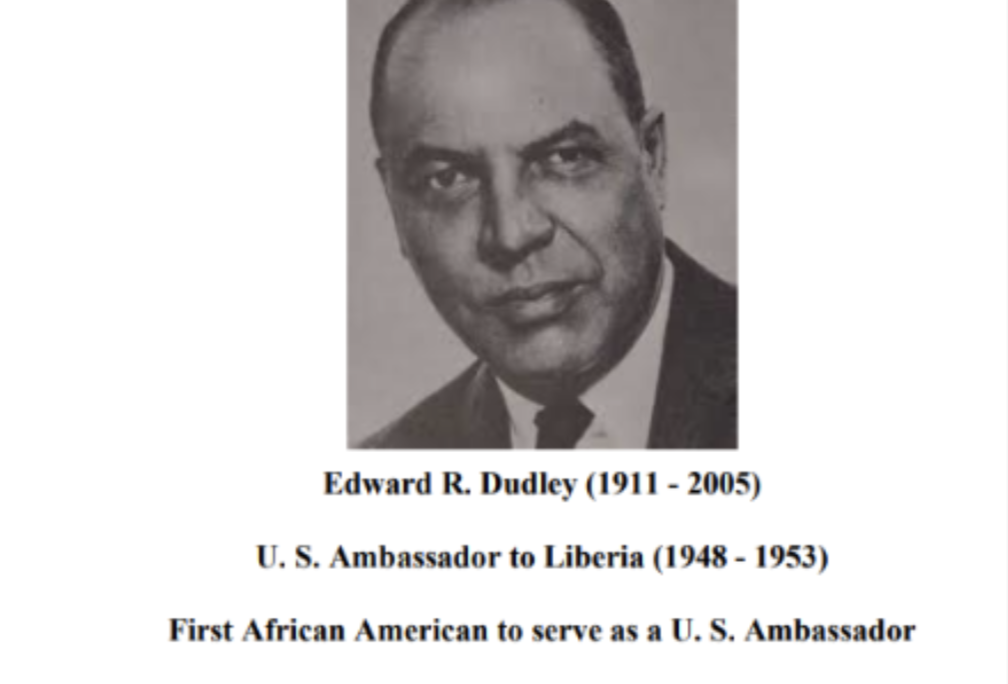
“Long before an Alpha chapter was established in Liberia, Alpha men by the names of William T. Francis, Lester A. Walton, Raphael O’Hara Lanier and Edward R. Dudley were making an impact in Liberia through the U.S. Foreign Service. For twenty two (22) years Alpha Men led the U. S. Foreign Mission in Liberia.” Truman appointed Dudley as the first U.S. Ambassador to Liberia—and the first African American to hold any ambassadorial post—tasking him with advancing Truman’s Four Point Plan by expanding foreign aid, technical support, and industrial and agricultural training across Africa.
He left the role in 1953 and rejoined the NAACP to work on its “Fight for Freedom” campaign before moving on in 1955 to serve as a Justice in New York City’s Domestic Relations Court.
In 1961, Dudley was elected President of the Borough of Manhattan, serving until 1965 and becoming the first African American to chair the New York County Democratic Committee.
David Newton Howell, an Alpha man and YMCA executive, would arrive in Liberia in 1949. He arrived not to charter a chapter, but to strengthen the YMCA’s presence.
What followed was something different.
Howell became a connector—linking American Alphas with Liberian educators, returning HBCU alumni, government officials, and church leaders. His position in the YMCA put him at the crossroads of every major civic initiative of the era. He knew the pastors, the principals, the ministers, the chiefs of bureau. He had access to the people Alpha needed—and he understood the assignment. He did not wear the title “organizer.” But quietly, strategically, almost invisibly, he was building Alpha Phi Alpha’s Liberian network brick by brick.
By the mid-1950s, Alpha Phi Alpha leaders recognized a turning point. African independence movements were rising, and Liberia—long independent, English-speaking, and deeply connected to Black America—stood out as the natural link between the two Black worlds. Enter General President Myles A. Paige. Paige, a brilliant strategist and one of the fraternity’s most adroit political thinkers, believed Alpha had a responsibility to shape the intellectual and civic landscape of newly emerging African democracies. And he believed that if Alpha were to establish a foothold in Africa, Liberia was the place to begin. Under Paige’s leadership, Alpha Phi Alpha began coordinating with its Liberian network. This included Rev. Steady’s early contacts, Howell’s YMCA alliances, Liberian Alpha alumni, and American-educated professionals serving in ministry, medicine, education, politics, and journalism.
By 1958, the pieces had aligned and Alpha’s long-range vision finally took shape. Alpha Phi Alpha chartered Eta Epsilon Lambda Chapter in Monrovia.
Its charter members included: government officials, educators, economists, clergy, journalists, civic architects of Liberia’s postwar modernization. They were men who would go on to shape national policy, build public institutions, and represent Liberia globally. Alpha Phi Alpha wasn’t just chartering a chapter—it was helping build a nation.
The 17 Charter Members of Eta Epsilon Lambda Chapter (1958):
Rev. I. E. C. Steady, David N. Howell, Dr. H. Boima Fahnbulleh, Sr., James E. Greene, J. Emmanuel Z. Brewer, E. Reginald Townsend, Josiah F. Sangbeh, Rev. G. Oliver Porter, Rev. J. Max Dennis, J. Togba Nah Tipoteh, E. Wilmot Allen, William Horace Boyle, Samuel D. Tweh, Edward K. Yancy, T. Edwin Gbesie, George B. Hodge, Joseph S. George.
Alpha’s influence culminated in 1976, when the fraternity held its international General Convention in Monrovia—drawing over 300 brothers and marking the first major BGLO convention ever held in Africa. Today Alpha Phi Alpha can boast of the current head of state of Liberia, President Joseph Nyumah Boakai.
A Legacy Beyond Borders: Delta Sigma Theta’s Enduring Presence in Liberia
As Delta Sigma Theta Sorority, Incorporated continued to extend its global reach, West Africa emerged as a natural and meaningful frontier—one shaped by shared history, cultural ties, and a deep commitment to service. It was within this spirit of intentional international sisterhood that the Liberia Alumnae Chapter was chartered, marking a defining milestone in Delta’s formal presence on the African continent.
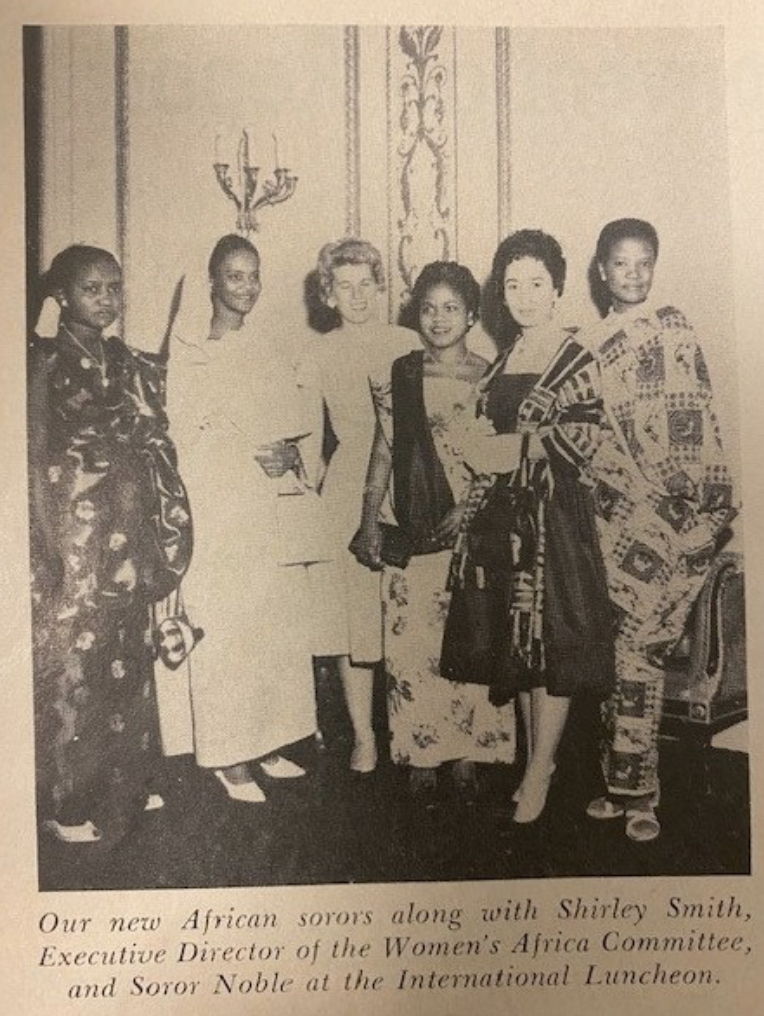
Established on January 6, 1960, and based in Monrovia, Liberia, the Liberia Alumnae Chapter came into being at a moment when Liberia stood as a beacon of Pan-Africanism, diplomacy, and transatlantic connection. That same year, Delta underscored its growing global consciousness during its 26th National Convention in Chicago, Illinois, where an International Luncheon highlighted the sorority’s engagement with Africa and international women’s leadership. The luncheon featured His Excellency George A. Padmore, then Liberian Ambassador to the United States, as keynote speaker, who brought greetings on behalf of his wife, Mrs. Mai Padmore, and reinforced the importance of cross-continental partnership and solidarity. Photo_DST 26th National Convention_International Luncheon.jpg
The Liberia Alumnae Chapter itself was composed of eight charter members—educational professionals and Peace Corps members whose lives and work embodied Delta’s cardinal principles of scholarship, service, and social action. These pioneering women were: June Dwellingham Cullins, Elsa Jewel Proctor Hines, P. Juette Johnson Neal, Elvira D. Walker Palmer, Ellen Mills Scarbrough, Beulah Rattley Stamps, Gertrude LaVerne Gross Tyler, and Calista Dennis. Notably, Soror Beulah R. Stamps served as the chapter’s first president, providing foundational leadership during the chapter’s formative years.
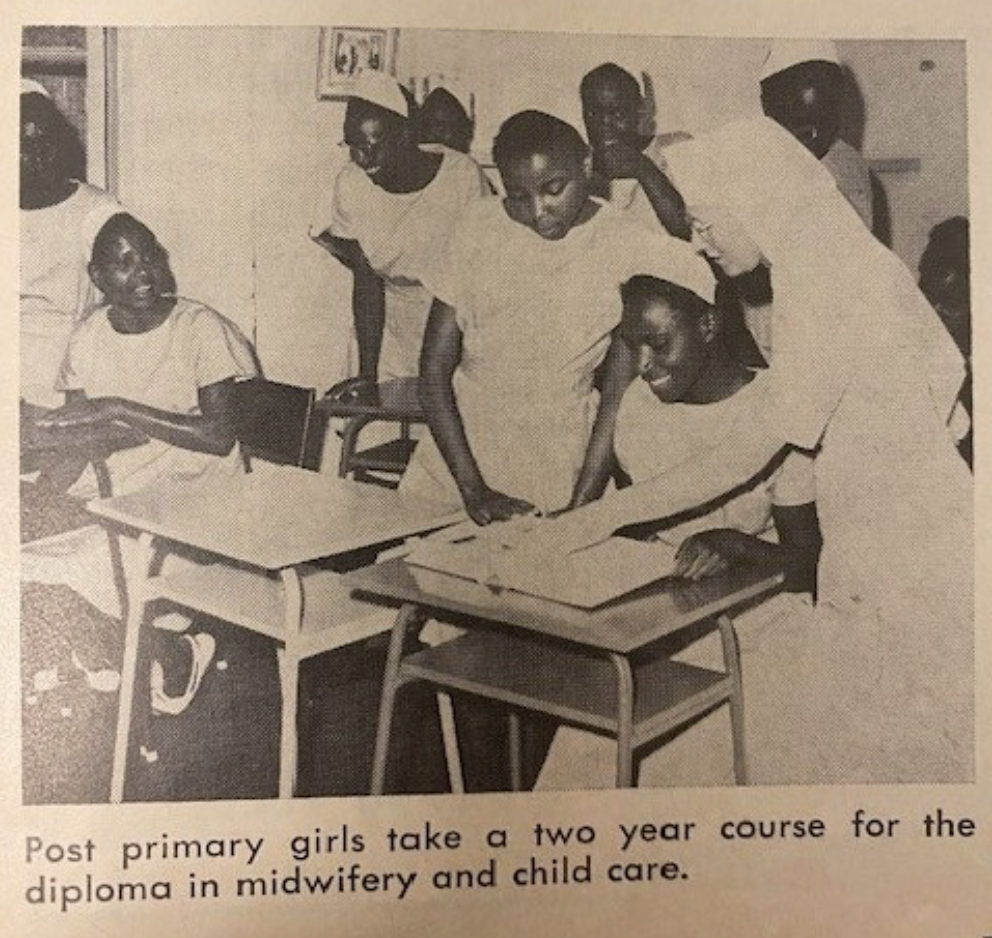
From its inception, the Liberia Alumnae Chapter was deeply engaged in service aligned with both local needs and Delta’s global mission. During the tenure of 13th National President, Dr. Geraldine Pittman Woods, Delta Sigma Theta made direct financial investments in Africa, presenting checks totaling $1,500 to U.S. State Department officials for women-centered initiatives in Liberia and Rwanda. Under the direction of Soror Ella Scarbrough of the Liberia Alumnae Chapter, $1,000 was designated for the National Council of Women of Liberia to support the development of a Girls Village—primarily a home and rehabilitative space for delinquent girls—reflecting an early and profound commitment to girls’ education, public health, and social welfare.
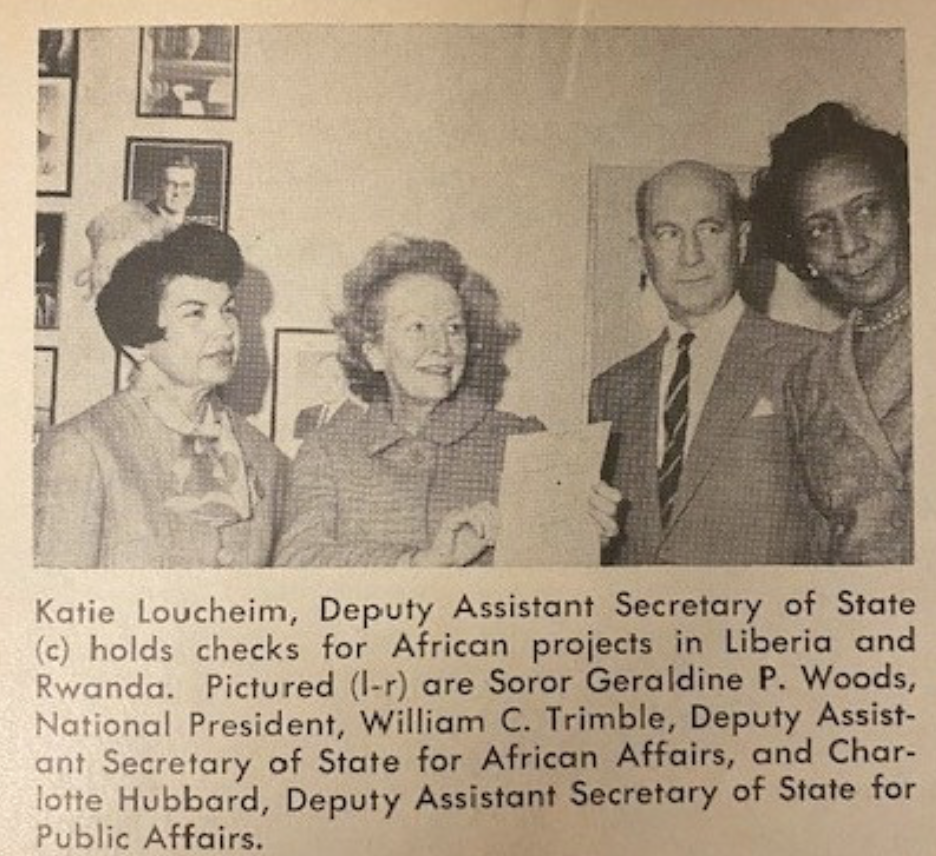
Together, these efforts positioned the Liberia Alumnae Chapter as both a symbolic and operational bridge between Delta’s U.S.-based leadership and African women’s advancement. Though the chapter was designated inactive in the early 1980s, its legacy did not fade. Instead, it laid critical groundwork for Delta’s sustained engagement in West Africa and helped shape the regional vision that would later evolve into broader West Africa alumnae structures—proof that even brief institutional footprints can leave enduring marks.
A Full-Circle Legacy: How Sigma Gamma Rho’s Educational Roots Came Home to Liberia
The expansion of Sigma Gamma Rho Sorority, Incorporated in August 1960 onto the African continent is more than a story of international growth—it is a story of return. In Liberia, the sorority’s presence unfolded in a way that mirrored its very origins, creating a powerful diasporic full circle rooted in education, service, and legacy.
Sigma Gamma Rho was founded in 1922 by seven visionary educators—women who believed deeply in the transformative power of learning as a tool for uplift. Teaching was not incidental to their mission; it was central. Education was the founders’ calling, their platform for leadership, and their strategy for social change. Decades later, that same commitment to education would carry the sorority across the Atlantic and back to the African continent. That journey took shape in Liberia through the work of Virgie Pruitt Fry, whose own path echoed that of the founders. Fry arrived in Liberia after her husband, Mr. Francis G. Fry, was assigned to active duty as a Communications Technician through the U.S. Government and Prairie View College. What began as a professional relocation soon evolved into something far more consequential.
Fry later accepted an appointment from the Liberian Government to serve as Head of the Department of Business at Booker T. Washington High School in Kakata, Liberia. There, at the Booker T. Washington Institute, the nation’s premier technical high school, she taught junior and senior students in the Secretarial Science Department. In classrooms dedicated to skill-building, discipline, and leadership, she modeled the very ideals that defined Sigma Gamma Rho’s founding principles.
It was within this educational environment—so reminiscent of the sorority’s beginnings in the United States—that the foundation of Sigma Gamma Rho in Liberia was laid. The parallels were striking: educators mentoring students, students becoming leaders, and learning serving as the bridge between generations and geographies.
That foundation culminated on August 19, 1960, with the chartering of Gamma Alpha Chapter. The chapter was established by Mary Brownell, Jenetta Ricks, Valerie Morris, Danieletta Bracewell, Emma Knuckles, Maggie Watkins, and Janie Johnson, all students of the University of Liberia. Their chartering symbolized more than organizational growth—it represented a reclamation of purpose, as the descendants of a diasporic journey carried forward a mission first shaped by educators decades earlier.
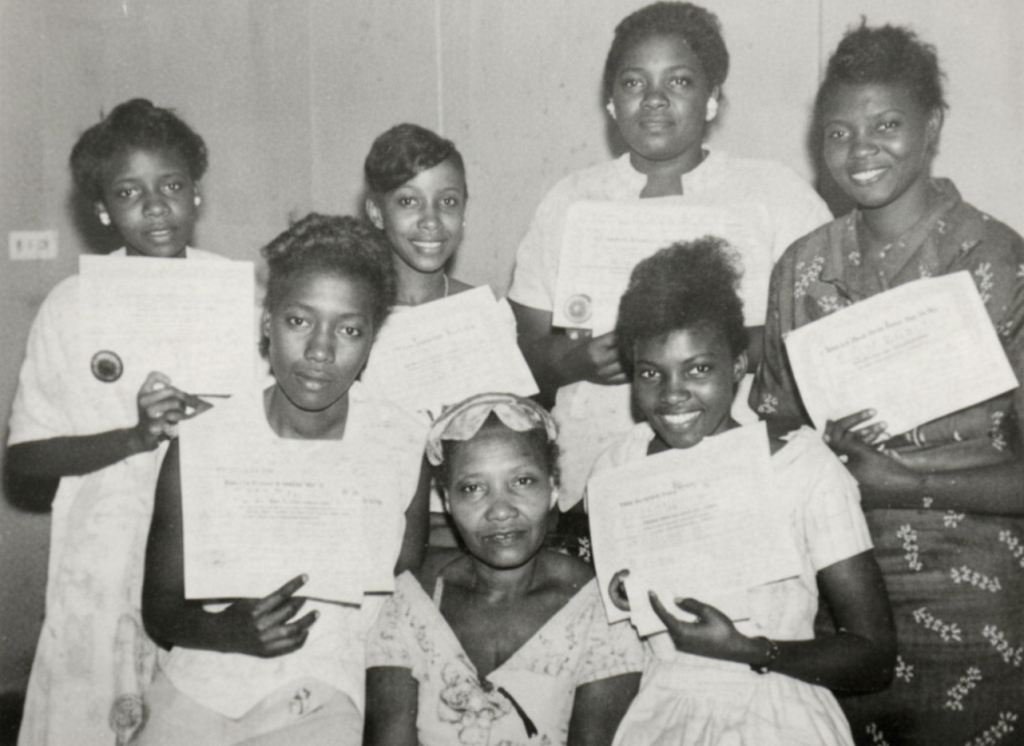
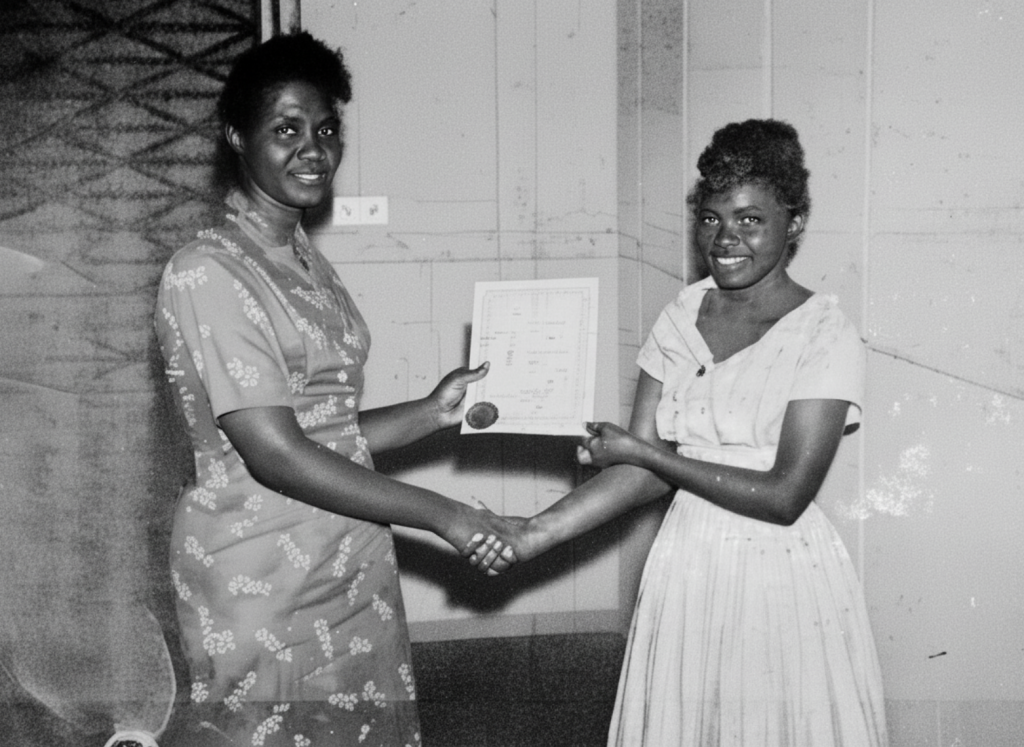
Sorors Mary Brownell and Maggie Watkins of Sigma Gamma Rho Sorority, Inc. holding chapter charter in Liberia
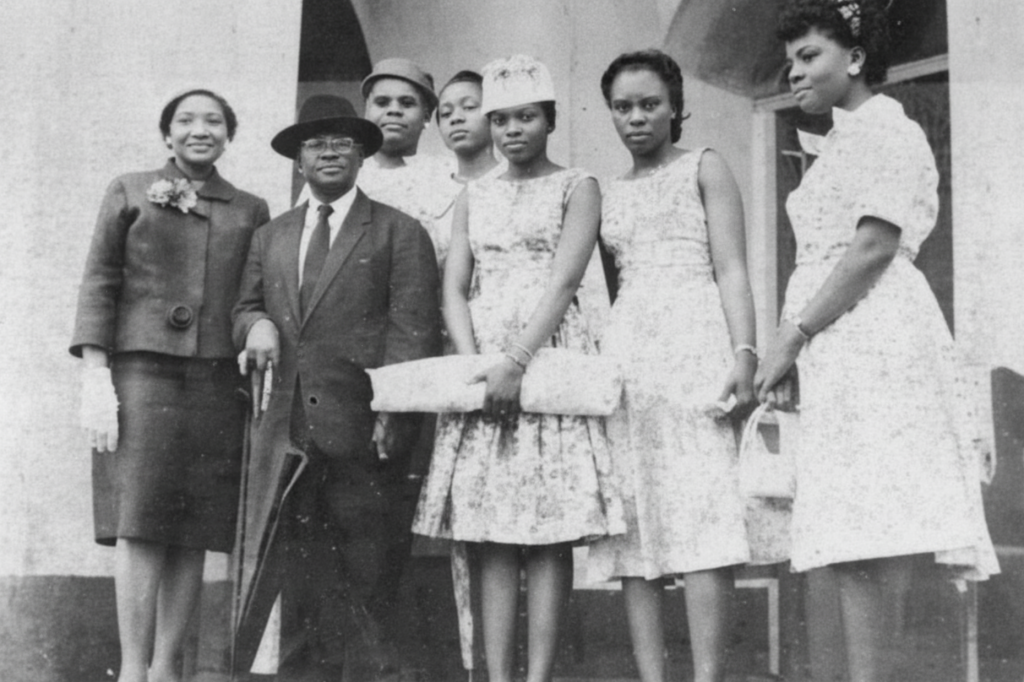
In Liberia’s history of transformative leaders, Mary N. Brownell, one of those 7 charter members, stands out not just for her educational work, but for her far-reaching impact on peace, women’s rights, and civil society. Born on March 12, 1929, in Cavalla, Maryland County, she defied conventions at a time when educational opportunities for women were limited and went on to shape her nation’s narrative of empowerment and unity. Brownell’s academic journey began in mission schools and culminated in a BSc in Primary Education from the University of Liberia in 1960, followed by an MSc in School Supervision from San Francisco State University—an exceptional achievement for any Liberian woman of her era.
Her professional life was rooted in education. She started as a classroom teacher and later became a principal at schools including Boatswain Elementary and Bong Mines School. Alongside this, she served in leadership roles within the Monrovia Consolidated School System and the Catholic School System, earning respect for her administrative skill and commitment to learners of all ages.
But Mary Brownell was more than an educator. She became a founding voice for women’s empowerment in Liberia, particularly during the country’s turbulent civil wars. As National Chairperson of the Liberian Women’s Initiative (LWI) and president of the Women’s Development Association of Liberia (WODAL), she was on the frontlines advocating for women’s rights, civic participation, and peace.
Her activism extended beyond education and gender rights. Brownell became a commissioner of the National Elections Commission, contributing to democratic processes, and was a founding member of the Mano River Women’s Peace Network (MARWOPNET)—a regional coalition of women from Liberia, Sierra Leone, and Guinea working to end conflict and build peace.
Her courage was not symbolic. During peace negotiations, Brownell and other women pressed relentlessly for disarmament and agreements that would bring an end to years of bloodshed. Her leadership helped pave the way for the Comprehensive Peace Accord of 2003, a pivotal moment in Liberia’s recovery from war.
Beyond institutional titles, Brownell was known as “Ma Mary”—a mentor, advocate, and community anchor whose influence extended into civil society and national consciousness. She remained outspoken throughout her life, even challenging elite power structures when they conflicted with ideals of justice and accountability.
Mary N. Brownell passed away on March 14, 2017, at the age of 88. Her legacy lives on through the women she inspired, organizations she shaped, and the peace she helped broker in one of West Africa’s most challenging chapters. Events marking anniversaries of her life continue to draw national and international attention, a testament to the depth of her influence.
In this way, Sigma Gamma Rho’s presence in Liberia stands as a profound moment of continuity. Founded by teachers in the United States, the sorority returned to Africa through the work of educators, took root among students, and flourished in institutions dedicated to learning. It is a reminder that the sorority’s global expansion was not a departure from its origins, but a reaffirmation of them—a full-circle return where education once again served as the seedbed of sisterhood, leadership, and lasting impact.
By the early 1970s, Liberia was home to the earliest African chapters of:
- Zeta Phi Beta (1948)
- Phi Beta Sigma (1950)
- Omega Psi Phi (1955)
- Alpha Kappa Alpha (1957)
- Alpha Phi Alpha (1958)
- Delta Sigma Theta (1960)
- Sigma Gamma Rho (1960)
The nation became the most concentrated early hub of BGLO activity on the African continent. Liberian members led in government, education, religion, medicine, journalism, diplomacy, engineering, and national development.
The 1980 coup and the ensuing civil conflicts devastated Liberia. Nearly every Divine Nine chapter went dormant. Records were destroyed. Members fled or were lost. Yet the memory of Liberia’s BGLO legacy survived in diaspora organizations, in West African fraternal networks, and in Liberia’s surviving civic institutions.
From 1948 to 1960, Liberia became the cradle of Black Greek life in Africa. Liberia was the first, the earliest, the deepest, and the most foundational space where the Divine Nine planted their ideals of scholarship, sisterhood, brotherhood, and service on African soil. Today, the legacy born in Monrovia continues to shape the Divine Nine’s work across Africa — a powerful reminder that the story of Black Greek life’s expansion into Africa is, at its foundation, a Liberian story.
References for Citation & Further Reading:
Comprehensive Reference List (Chicago Style, 17th Edition)
Primary Sources
Alpha Phi Alpha Fraternity, Inc. Proceedings of the 30th General Convention. Washington, D.C.: Alpha Phi Alpha Archives, 1936.
Alpha Phi Alpha Fraternity, Inc. Eta Epsilon Lambda Chapter Charter Documents. Monrovia: Liberia Chapter Archives, 1958.
Alpha Phi Alpha Fraternity, Inc. International Expansion Papers, 1940–1960. Baltimore: Alpha National Archives, 1960.
Banks Henries, A. Doris. Personal Papers and Correspondence, 1948–1965. Monrovia: Liberia National Cultural Center.
Cuttington University Archives. Rev. J. Max Dennis Papers, 1950–1980. Suacoco, Liberia.
Dunn, Elwood D., and Svend Holsoe. Historical Dictionary of Liberia. Metuchen, NJ: Scarecrow Press, 1985.
Howard University Moorland–Spingarn Research Center. African Expansion and Fraternal Correspondence Files. Washington, D.C., 1930–1960.
Liberia Ministry of Education. Annual Reports, 1945–1975. Monrovia: Government Printing Office.
Liberia National Museum. Americo-Liberian Civic Society Materials. Monrovia.
Rev. I. E. C. Steady. Missionary Diary and Correspondence, 1930–1940. Monrovia: United Methodist Church Archives.
Tubman, William V. S. Selected Speeches and Papers, 1944–1960. Monrovia: Government Printing Office.
YMCA International Archives. David N. Howell Correspondence and West Africa Files. Geneva: World Alliance of YMCAs, 1949–1958.
BGLO Organizational Records
Alpha Kappa Alpha Sorority, Inc. Eta Beta Omega Charter Records. Monrovia: AKA International Archives, 1957.
Delta Sigma Theta Sorority, Inc. West Africa Alumnae Records and Liberia Program Files, 1960–1975. Washington, D.C.: DST Archives.
Omega Psi Phi Fraternity, Inc. Tau Chi Chapter Charter Document. Monrovia: Omega International Archives, 1955.
Phi Beta Sigma Fraternity, Inc. Beta Upsilon Sigma Chapter Records. Monrovia: PBS International Archives, c. 1950.
Sigma Gamma Rho Sorority, Inc. Gamma Alpha Chapter Charter Papers. Monrovia: SGRho International Archives, 1960.
Zeta Phi Beta Sorority, Inc. Delta Iota Zeta Chapter Charter and International Program Files, 1948–1965. Washington, D.C.: Zeta International Headquarters.
Secondary Scholarly Sources
Williams, T. Nelson, II. A History of Alpha Phi Alpha in Liberia: A Leadership and Service Legacy. Monrovia, Liberia: Type Company Limited, 2015.
Akpan, N. J. The African Diaspora and the Making of Modern Liberia. Boston: Diaspora Press, 1999.
Azikiwe, Nnamdi. Renascent Africa. London: Frank Cass, 1937.
Brown, Theodore M. A History of Alpha Phi Alpha: 1906–1960. Detroit: Alpha Publishing, 1961.
Burrowes, Carl Patrick. Power and Press Freedom in Liberia: Civil Liberties, Media, and Politics, 1830–1970. Trenton, NJ: Africa World Press, 2004.
Dunn, Elwood D., and Svend E. Holsoe. Historical Dictionary of Liberia. Metuchen, NJ: Scarecrow Press, 1985.
Esedebe, Peter Olufemi. Pan-Africanism: The Idea and Movement, 1776–1991. Washington, D.C.: Howard University Press, 1994.
Gaines, Kevin K. American Africans in Ghana: Black Expatriates and the Civil Rights Era. Chapel Hill: University of North Carolina Press, 2006.
Liebenow, J. Gus. Liberia: The Quest for Democracy. Bloomington: Indiana University Press, 1987.
Nkrumah, Kwame. Africa Must Unite. London: Heinemann, 1963.
Park, Michael. HBCUs and African Return: Diaspora Education Movements, 1890–1970. New York: Diaspora Academic Press, 2012.
Phyall, Malcolm. Black Fraternities and the Pan-African Connection. Atlanta: Bond & Brothers Publishing, 2012.
Sawyer, Amos A. The Emergence of Autocracy in Liberia: Tragedy and Challenge. San Francisco: ICS Press, 1992.
Simpson, Vaughn. Alpha Sorority, Incorporated, Eta Beta Omega Chapter. The Phoenix Rising to Timeless Service. May 2014.
Biographical, Oral History & Archival Interviews
Brewer, J. E., interview by Monrovia Oral History Project. The Early Years of Fraternal Life in Liberia. Monrovia, 1978.
Dennis, J. Max, interview by Cuttington University Historical Collection. Religious and Fraternal Influence in Postwar Liberia. 1983.
Greene, James E., interview. Founding Eta Epsilon Lambda. Liberia Heritage Archive, 1978.
Samuels, Belva. Project Africa Papers. Sigma Gamma Rho International Archives, 1960–1975.
Townsend, E. Reginald. Personal Papers and Government Correspondence, 1950–1970. Monrovia: National Cultural Center.
Yancy, Ernest J. Diplomatic Papers and Personal Interviews. Monrovia Oral Archive, 1981.
Verified Digital Sources (Organizational Websites & Historical Databases)
AKA International Archives. “International Chapters Overview.” https://aka1908.com/
GhanaQues (Omega Psi Phi 13th District). “TX History.” https://ghanaques.org/tx-history
GhanaQues. “About Us.” https://ghanaques.org/about-us
Liberia Zetas Official Website. “About Delta Iota Zeta Chapter.” https://liberiazetas.org
Phi Beta Sigma Fraternity, Inc. International. “Historical Chapter Listings.” https://phibetasigma1914.org/
Sigma Gamma Rho Sorority, Inc. “Project Africa and International Programs.” https://sgrho1922.org/
Zeta Phi Beta Sorority, Inc. “International Chapters and African Expansion History.” https://zphib1920.org/
Liberia–U.S. Relations & Diaspora Connections
Burrowes, Carl Patrick. Liberia and America: The Politics of an Affinity. Lanham: Lexington Books, 2009.
Johnston, Harry. Liberia. London: Hutchinson & Co., 1906.
Wilberforce University Archives. “Liberian Alumni Files, 1910–1960.”
Lincoln University Archives. “West African Student Enrollment & BGLO Membership Records.”








 Zetas2 days ago
Meet Sabrena Ball: The Zeta Phi Beta Leader Helping Navigate NASA’s Artemis II Mission
 Leadership Highlight4 days ago
Leadership Highlight: Clark Atlanta University’s Graduate Student Government President Jorvis McGee
 Leadership Highlight1 week ago
Leadership Highlight: Elizabeth City State University’s Student Government President Jasmine Jackson