Alphas
Leadership Highlight: Georgia Institute of Technology’s Student Government President Sultan Ziyad

In an effort to highlight the people who are leading colleges and universities across the nation, we at Watch The Yard reached out to Georgia Institute of Technology and did an interview with Sultan Ziyad, the 2025–2026 Student Government Association president.
The position of student government president is a highly respected role and there is a special pride that one takes in being elected by their peers to lead. Sultan Ziyad, who is majoring in Civil Engineering, is from Atlanta, GA.
He is a proud Spring 2024 initiate of Alpha Phi Alpha.
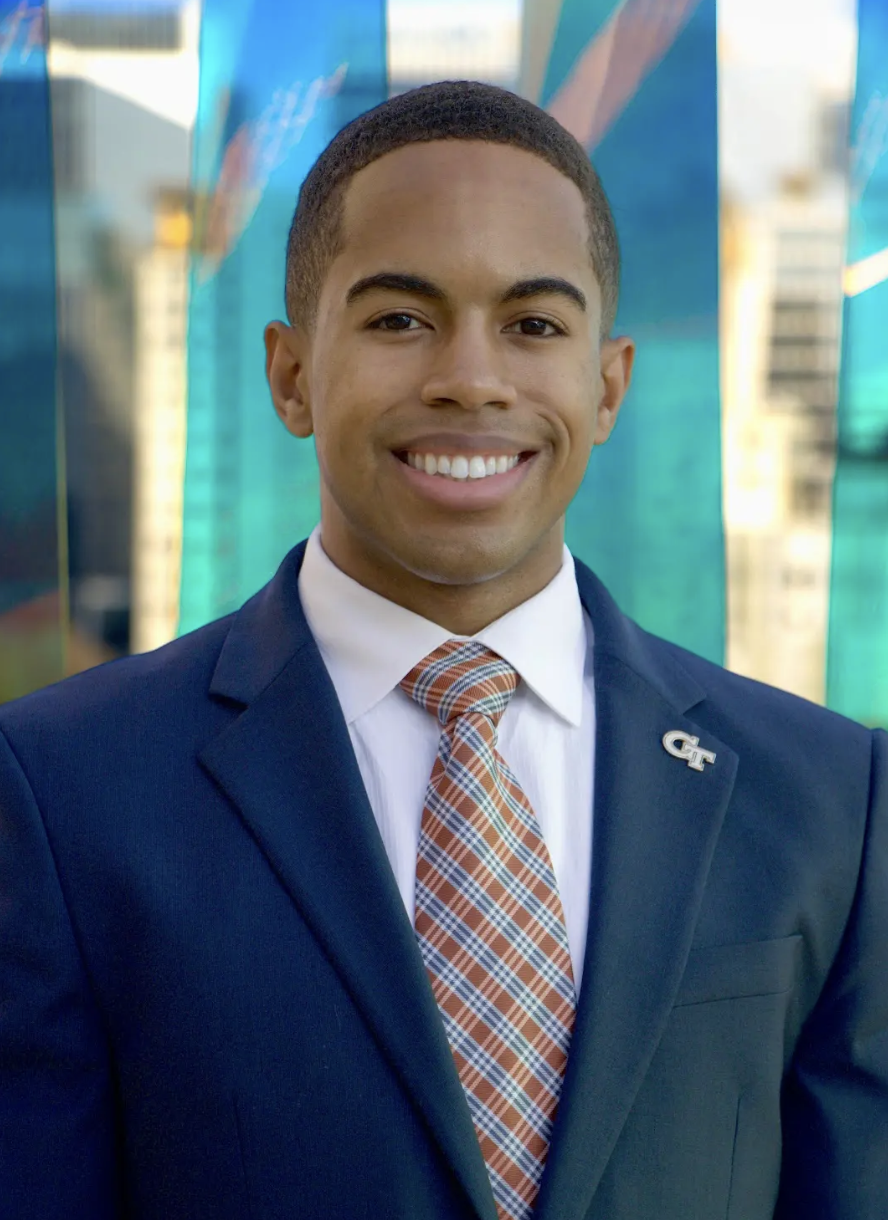
We interviewed Sultan Ziyad and talked to him about his position, goals, future and what it means to hold this type of leadership position in 2025–2026.
Read the full interview below.
What is the biggest thing you’ve learned as a student government president so far?
Communication is 75% of the battle. What, when, where, and how you communicate ultimately determines whether any collaboration effort, event, or initiative is successful. The “how” is key. Not every person responds via the same communication style or platform. While it is important to have set standards initially, it is equally important to meet people where they are. If your communication is not meeting others’ needs or is causing misunderstandings, you need to look within and adapt. Take the initiative to make a change. Try something different. It makes the job easier going forward.
What made you decide to attend Georgia Institute of Technology for undergrad?
Georgia Tech was the best overall fit for me. My major is Civil Engineering. Georgia Tech’s Civil Engineering program consistently ranks in the top three among colleges nationally. Georgia Tech students are incredibly smart, driven, and committed to their dreams and aspirations. Surrounding myself with others who are equally passionate about achieving their goals helps me thrive. I am also a native Atlantan, and remaining close to family and friends was an incentive. Georgia Tech was also the most affordable option. The Zell Miller Scholarship enables in-state students with a 3.0 GPA or higher to attend public colleges in Georgia at no tuition cost. This substantially lessens the financial burden and dramatically reduces student debt.

How has Georgia Institute of Technology molded you into the person you are today?
Georgia Tech has boosted my strengths and tested my weaknesses. The environment is tough. I am surrounded by students who were Valedictorians and Salutatorians of their high school classes. Understanding lecture content and coursework for difficult Math, Science, and Engineering courses comes more naturally to others than it does to me. I use this as an opportunity to push through the challenge and to build tenacity. And with every difficult course comes another course that stimulates my interest in a new topic. These courses strengthen my organization and communication skills. They allow me to create multimodal presentations and reports that demonstrate my knowledge through more creative avenues. It is a constant balancing act, but the person I am today is tougher, more level-headed, more structured, more methodical, and more confident than the person who arrived at Georgia Tech three and a half years ago.
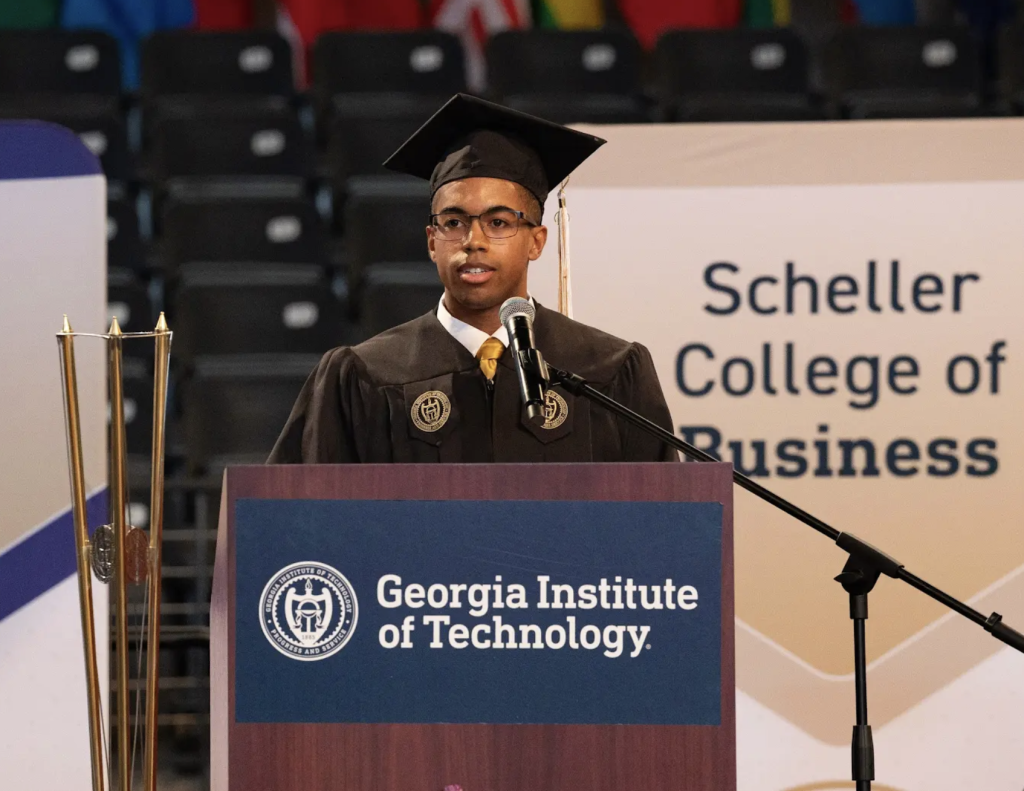
What specific initiatives have you headed up this year (or are planning) and how do you think they will improve the school and surrounding community?
My guiding vision for this school year is “D.R.I.V.E.” D.R.I.V.E. stands for “Develop SGA to Champion Change. Respond to Students Swiftly. Improve Service to Student Organizations. Voice Student Views to Faculty. Establish SGA’s Standard of Excellence.” The primary goal this year has been to ensure that SGA is a boots-on-the-ground organization with more visible programming and events for students. We have implemented multiple initiatives to that end.
We started the school year strong with five Week-of-Welcome events to engage freshmen early and start their acclimation to campus. The “Consent is Like Tea” event educated freshmen on safe sex practices. Cinema & S’mores brought students together to socialize and make friends. Allergy Table Talk provided a demonstration on safe-serve practices, tips for avoiding cross-contamination, and how to navigate Georgia Tech Dining Services. Critical Swarm was the first of its kind; we partnered with the Campus Recreation Center for a dynamic bike ride around campus, unveiling the new cycle track. SGA played a large role in the cycle track project’s advocacy and implementation. The annual SGA Open House was our official welcome event to get new students connected and involved with all of the important work that SGA does. We continued our freshman-specific programming throughout the first semester with Freshman Help Desk, a new tabling initiative outside of freshman dorms to address ongoing concerns while offering additional resources and support.
We also created a Student Organization Resource Guide and Degree Roadmap Tool. The Resource Guide is a one-stop hub for everything student organizations need to successfully operate on campus. It covers everything from funding tips to event planning timelines and campus contacts. The Degree Roadmap tool is currently in its beta launch phase. This is a project several semesters in the making, but it is a new online tool and method to visualize and manage multi-semester course planning. It uses Georgia Tech data, such as course prerequisites, to help students accurately plan instead of scrambling during course registration time.
We recognize the challenges of our current political climate and how it impacts various student populations. SGA has implemented and expanded several initiatives, including the International Immigration Forum, Pro-Bono Free Legal Advising services for students, the annual Wreck the Vote initiative for local elections, and the SGA External Affairs Speaker Series with Georgia politicians from both parties.
Finances continue to be a concern for many students. This year we created the Ramblin Room Relief initiative, which subsidizes fees that student organizations would otherwise incur from campus room reservations and custodial fees. Regarding general funding for student organizations, we streamlined the bills and budgets submission and review processes. Turnaround time has decreased substantially, while the volume of submissions has doubled. I also collaborated with the Georgia Tech library to secure free Atlanta Journal Constitution subscriptions for all students, faculty, and staff.
Every initiative under the D.R.I.V.E. guiding vision is designed to make SGA more accessible, responsive, and effective for students while strengthening its role as a change agent on campus. The examples above highlight some of our most visible projects, but they represent only a portion of the work we do. Much more is happening behind the scenes to ensure Georgia Tech SGA sets the standard for excellence and student engagement.
How is your student government administration/school currently working on attending to the mental health of students?
The mental health and well-being of students are top priorities for our SGA and administration. We have several ongoing collaborative initiatives and partnerships with Georgia Tech’s Student Engagement and Well-Being unit to ensure that we are meeting the need. In our Student Government, we have a Vice President of Well-Being. Under her leadership, there is a Mental Health Chair and Committee, Public Health Chair and Committee, and Sexual Violence Advisory Chair and Committee. One of our largest initiatives is the Mental Health Joint Allocation Committee (MHJAC). This is a committee my administration revitalized this year. It contains approximately $500,000.00, specifically for mental health initiatives on campus. Any student, student organization, faculty member, or staff member can submit a proposal requesting MHJAC funding. It has funded numerous successful campus-wide projects since 2017. We also contributed to National Suicide Prevention Week programming this year with the theme, “Bonded in Hope”. Another major initiative we created and are now promoting is a Wellness Resource Guide for all students. There are many siloed resources on campus, and communication is oversaturated. The guide consolidates wellness resources into one brochure. This helps students accurately identify the specific resources they need and how to access them.

What does leadership mean to you?
Leadership is a rollercoaster of highs, lows, twists, turns, triumphs, challenges, and impact. You start the ride with a goal: I want to accomplish this thing during my tenure. As the ride progresses, every action you take has either a positive or a negative consequence. You will make great decisions. You will also make mistakes. Great decisions bring you closer to your destination. The mistakes may cause minor setbacks, but they are also tremendous learning opportunities. Leadership means taking accountability for your actions and setting an example for others. Leadership is a practice, but that practice does not create perfection. A leader can always grow, achieve another goal, learn to be more efficient, and handle situations differently. Ultimately, it is one’s mindset, attitude, and persistence that leads one to the goal. Stay the course and see it through.
We now live in a digital world, what do you think schools need to do to represent themselves online in 2025–2026?
Schools must become more creative with media. In today’s climate, short, viral clips and reels grab more eyes online and generate more engagement overall. People are not engaging as much with longer articles and publications. To get a message across, it has to be succinct, to the point, and catchy. It is time to leverage students. Our generation has grown up with social media apps and platforms. Use us as a resource to create new ideas and content that bring more engagement.
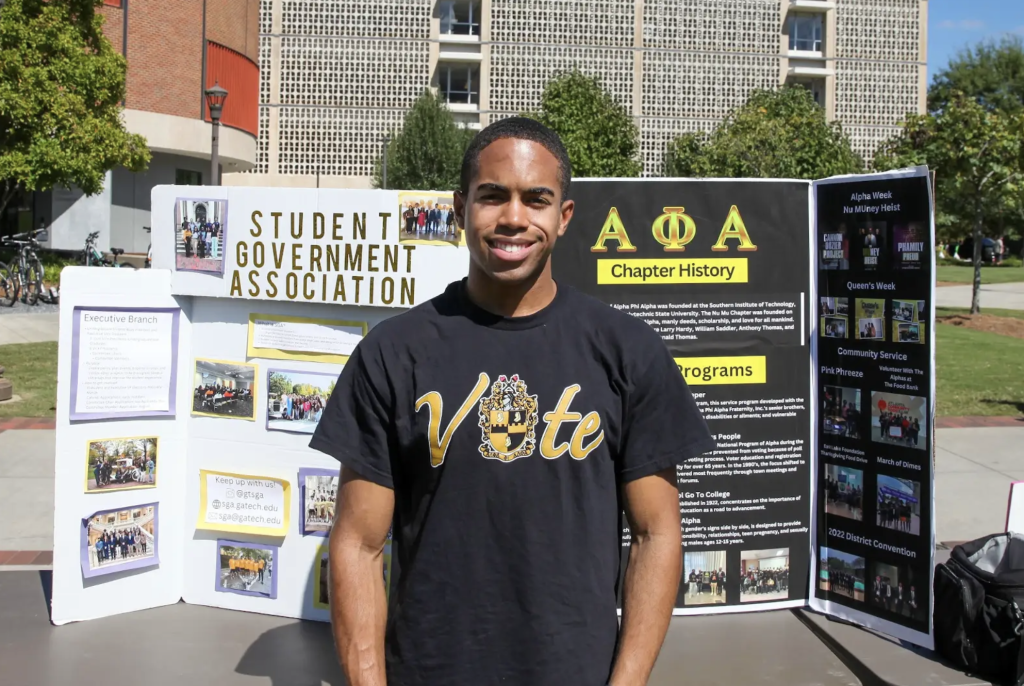
Why do you think Watch The Yard is important to Black students and college culture?
Watch the Yard amplifies and unifies Black students and our work across the country. Too often, the accomplishments of Black students go unnoticed by mainstream media outlets and fail to receive adequate recognition. By creating a space dedicated to celebrating young Black excellence, leadership, and culture, Watch The Yard ensures that our stories are told. It not only highlights accomplishments but also builds a sense of belonging and community among Black students nationwide. This representation matters because it validates our experiences and inspires future leaders.
What do you plan on doing after graduation?
After graduation, I plan to work in the Civil Engineering industry or pursue a Master’s Degree. I see my Bachelor’s degree as a bridge to something greater and unlocking my true passion and purpose. Until that bridge appears, there are many subdisciplines within Civil Engineering to pursue. Whether I choose Transportation, Structures, Water, or another subdiscipline, my goal is to soak in as much knowledge as possible, build my professional skills, and perfect my technical skills. If I choose the Master’s Degree route, I want to explore something completely different from Civil Engineering. I am extremely passionate about the work I do in Student Government, and I want to continue developing the skills I have gained in this role. I will likely pursue a degree program in Public Policy or Business Administration, or prepare to enter Law School.
We at Watch The Yard would like to commend Sultan Ziyad for his work as the student government president of Georgia Institute of Technology.
Photo Credits: Josh Weems @phlixbyjosh

-

 History1 week ago
Uncovering Upsilon Delta Pi: A Forgotten Chicago-Based Black Sorority
-

 Alphas3 days ago
Leadership Highlight: Tuskegee University’s Student Government President Avery Thomas
-

 Alphas1 week ago
Leadership Highlight: Columbus State University’s Student Government President Undrell Walker