Leadership Highlight
Leadership Highlight: Emory University’s Student Government President Tyler Martinez

In an effort to highlight the people who are leading colleges and universities across the nation, we at Watch The Yard reached out to Emory University and did an interview with Tyler Martinez, the 2025–2026 Student Government Association president.
The position of student government president is a highly respected role and there is a special pride that one takes in being elected by their peers to lead. Tyler Martinez, who is majoring in African American Studies, is from Brooklyn, NY.
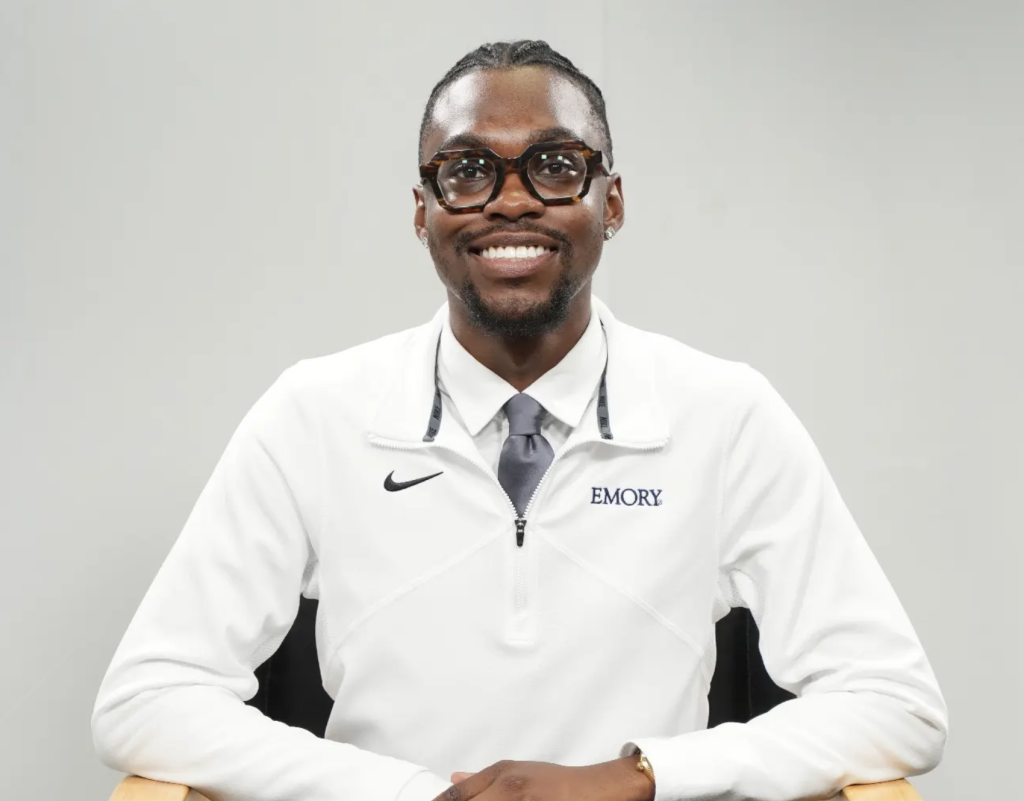
We interviewed Tyler Martinez and talked to him about his position, goals, future and what it means to hold this type of leadership position in 2025–2026.
Read the full interview below.
What is the biggest thing you’ve learned as a student government president so far?
The biggest thing I’ve learned as an SGA President is that you can’t control the uncontrollable, but you can control how you respond to it and show up for students. In a climate where so many changes are occurring that I may not always agree with, I find myself wanting to have control over decisions well beyond my authority. While I believe in holding my institution accountable and pushing for equitable change, I find it more important to think about how I, as the SGA President, can support students in real time while that change is unfolding—that is what I can control. After realizing this, I’ve been able to focus my leadership on creating new programs and experiences that reflect what students care about most, while also sustaining the traditions, spaces, and systems that anchor their sense of belonging. Even when institutional priorities shift, I can make an impact by being resilient and creative, building opportunities that reflect student values and sustain a culture of community and care.
What made you decide to attend Emory University for undergrad?
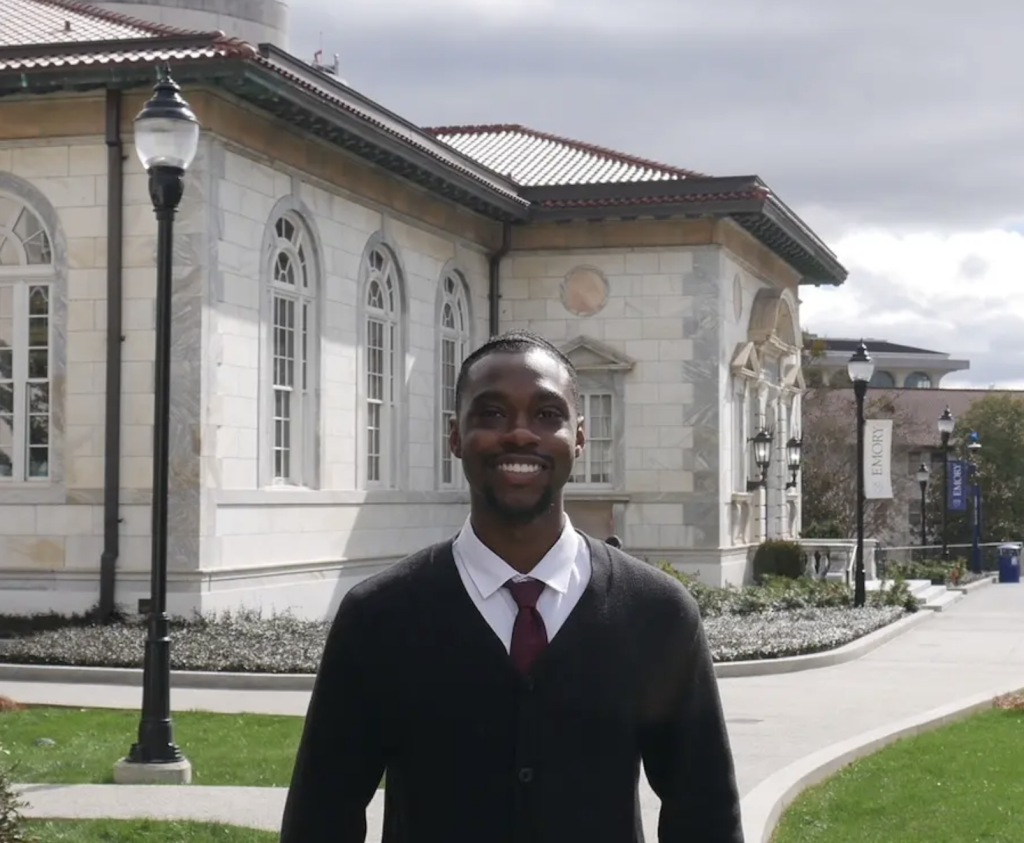
I decided to attend Emory University because its student support is truly unmatched. I felt confident that I would be supported not just academically, but personally throughout my undergraduate experience. The African American Studies department stood out to me for its commitment to exploring the many dimensions of the Black diaspora and for its faculty, who push students to carry their scholarship beyond the classroom and into their personal endeavors and future careers. I could also tell that Emory genuinely invests in the student experience by fostering a strong sense of belonging in departments such as Belonging and Community Justice, programs like the Black Male Initiative, and the immense programming experiences provided to students through the Student Involvement, Leadership, and Transitions office. As a first-generation college student, I knew that Emory would be a place where I could fully explore who I wanted to become, be set up for success, and be supported well after I graduated.

How has Emory University molded you into the person you are today?
Emory has shaped me into a resilient, reflective, and community-centered leader. Through moments of challenge and change, I’ve learned how to adapt, persevere, and show up for others with intention. Emory’s emphasis on belonging, service, and critical inquiry pushed me to think deeply about justice and identity, while also giving me the space to turn that learning into action through student leadership and community engagement. Those experiences strengthened my ability to lead with empathy, resilience, and purpose—values that now guide both who I am and how I move through the world.
What specific initiatives have you headed up this year (or are planning) and how do you think they will improve the school and surrounding community?
In response to significant institutional changes at Emory, including the removal of diversity, equity, and inclusion initiatives, my SGA administration has prioritized preserving those values through action. Rather than allowing these shifts to weaken the student experience, we have focused on strengthening student-led initiatives that foster community, engagement, and school spirit. This includes supporting a graduation celebration that uplifts graduates across the university, with particular attention to students whose experiences and contributions have not always been fully recognized or represented. We are also working to establish a grant that supports signature cultural events that promote connection, learning, and shared understanding across campus. Together, these efforts ensure that Emory students continue to grow as global citizens who actively contribute to a more connected and informed campus community.
Alongside this work, we have taken steps to strengthen trust and communication around campus safety. In partnership with the Emory Police Department, we established the EPD Student Advisory Board to bridge the gap between students and public safety officials. This board creates space for open dialogue and student input, while also recommending policy updates that more directly reflect student needs and concerns related to safety and well-being.
We are also in the process of overhauling our governing documents and operational codes to bring greater transparency and clarity to how both SGA and student organizations function. Prior to my term, revisions to these documents occurred internally with limited visibility. In response, my administration has prioritized openness by publicly releasing a report detailing Student Activity Fee allocations, distributing a survey to better understand how organizations wish to use their funding, and clearly outlining SGA’s responsibilities. These steps have helped remove the barriers that once separated SGA from the student body and reinforced our commitment to accountability and trust.
Lastly, we are intentionally rebranding Emory SGA through programming that builds school spirit and reshapes how students engage with student government. Initiatives like SGA Fridays create accessible, student-centered spaces for connection and joy, helping destigmatize SGA and make our work more visible and approachable. In collaboration with the Center for Civic and Community Engagement and Restoring One’s Hope Atlanta, our Thanksgiving Service Project extended this impact beyond campus by bringing students together to serve the surrounding Atlanta community and provide meals to hundreds of residents in need. These initiatives seek to improve Emory by building a more engaged, informed, and connected campus community, while also expanding student engagement and support for communities beyond the university.
How is your student government administration/school currently working on attending to the mental health of students?
My administration is committed to expanding awareness of mental health resources on campus by creating a comprehensive guide that highlights both institutional services available to students and the plethora of student organizations that offer spaces of support and care. We have been engaging in ongoing conversations with the Emory Police Department to better understand and clarify the response process for mental health–related calls. Our goal is to ensure that students know what to expect when contacting EPD for mental health support, while also working collaboratively to identify opportunities to strengthen and improve the response process in ways that prioritize student care and safety. In an academic capacity, we are advocating for a more streamlined and clearly defined midterm schedule. Currently, the lack of a consistent definition of what constitutes “midterms” often results in overlapping exams, assignments, and assessments that leave students feeling overwhelmed. By pushing for greater coordination and clarity, we aim to reduce academic overload, support student well-being, and create a more balanced and predictable academic experience.
What does leadership mean to you?
To me, leadership is about how you show up for your community, especially in moments of need. It means being a selfless advocate who listens with intention, leads with empathy, and prioritizes the well-being of others over personal recognition. True leadership is rooted in service, consistency, and accountability, and it requires the courage to act even when your work is difficult or goes unseen. At the same time, leadership is knowing when to step back, creating space for others to be empowered and trusted to lead alongside you because when you are a leader, success means cultivating leaders and changemakers beyond yourself.
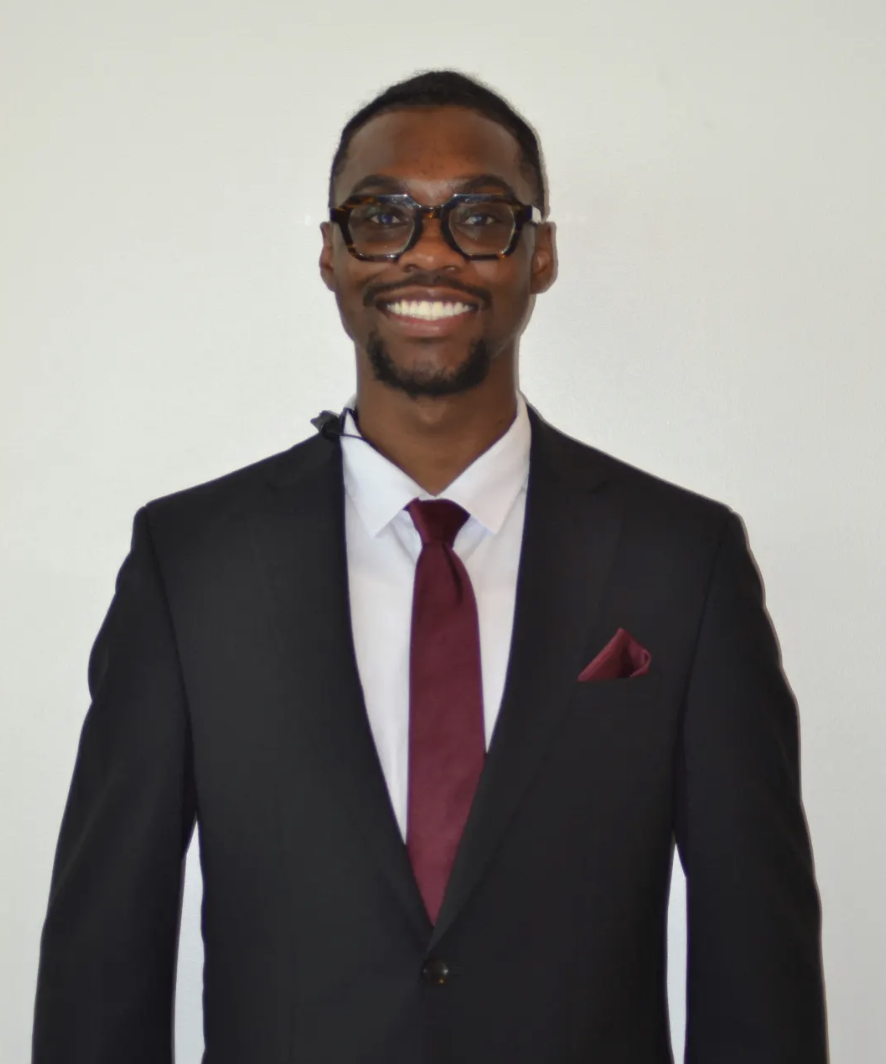
As the third Black president in Emory SGA’s 59-year history, leadership has meant understanding the weight of representation and remaining deeply grounded in the value of representation, community, and service. My experience has taught me that leadership is about showing up consistently for students, advocating with integrity, and creating space for voices that have historically gone unheard. Carrying this role has strengthened my commitment to lead with humility, resilience, and care, knowing that leadership is measured by impact, trust, and the ability to leave institutions better than you found them.
We now live in a digital world, what do you think schools need to do to represent themselves online in 2025–2026?
In a digital world, schools need to represent themselves online with honesty and authenticity rather than relying solely on prestige or rankings. Today’s students are looking for real experiences, real stories, and a clear sense of what campus life actually feels like. An effective digital presence in 2025–2026 should highlight student voices, everyday moments, and the ways institutions support students beyond the classroom. Schools should use their platforms to show how their values are practiced and not just stated. This can be done through highlighting student-led events, student leaders, and how students show up for one another. By centering authenticity and lived experience, schools can build trust and help students make informed decisions based on fit rather than reputation.
Why do you think Watch The Yard is important to Black students and college culture?
Watch The Yard is a crucial platform for Black students and college culture because it highlights the breadth of Black excellence rooted in college campuses while also showing how that excellence extends far beyond them. In the moments highlighted by Watch the Yard, I’ve been able to see the real-time impact of Black leadership, creativity, and community building across institutions nationwide. Watching students, organizations, and leaders be affirmed and celebrated has reinforced for me the importance of representation, legacy, and collective Black pride. At the same time, it has reminded me that my potential is limitless and my dreams are within reach. Watch The Yard has shaped how I show up as a leader, reminding me that impact doesn’t stop at campus gates and that the work I do can inspire far beyond the walls of Emory. I keep doing what I do because of platforms like Watch the Yard.
What do you plan on doing after graduation?
After graduation, I plan to pursue a master’s degree in Higher Education. Inspired by the higher education professionals who supported, challenged, and advocated for me throughout my undergraduate journey, I hope to build a career within higher education focused on supporting students holistically. Through my leadership experiences, I have seen the transformative impact that intentional student support can have, and I aspire to help create student-centered environments where all students feel empowered, experience a true sense of belonging, and graduate with the tools to succeed both on campus and beyond.
We at Watch The Yard would like to commend Tyler Martinez for his work as the student government president of Emory University.
Photo Credits: @bzymedia, @emoryuniversity, @soph.guer, @soph.guer

-

 Kappas1 week ago
EXCLUSIVE: Jerry Lorenzo on FAMU, Fear of God, and the Deeper Meaning of Style in Kappa Alpha Psi
-

 Sigmas2 days ago
Phi Beta Sigma’s Victor Glover Set to Make History as First Black Astronaut to Reach the Moon
-

 Alphas1 week ago
Leadership Highlight: University of Memphis’ Student Government President Chris Bailey